Monday, March 11, 2013

Showboat or Patriot?

Weekly Opinion Editorial

SHOWBOAT OR PATRIOT?
by Steve Fair
 
A filibuster is a type of parliamentary procedure where debate is extended, allowing one or more members to delay the vote on a bill or issue.  It is sometimes called, “talking out a bill,” and is considered a form of obstruction in a legislative body.  Most Americans know about the filibuster from the movie, "Mr Smith goes to Washington." 

Clare Boothe Luce, the first women appointed to a major ambassadorial post and the wife of the publisher of Time magazine, said about the filibuster; “They say women talk too much.  If you worked in Congress you know that the filibuster was invented by men.”

The elimination of the filibuster in Congress  has been debated for years, but it always stays intact because the majority Party recognizes that at some point they could be the minority Party and they may need it in their tool box.

Last week, Senator Rand Paul, (R-Kentucky), launched a talking filibuster to stall John Brennan’s confirmation vote for the position of Director of the CIA.  Paul demanded an answer to the question "Should a President be allowed to target, and kill an American by drone attack, on American soil, without due process?" Paul’s question was in response to comments from Attorney General Eric Holder before the Senate Judiciary Committee. When Senator Ted Cruz, (R-Texas), asked Holder whether he believed it would be constitutional to target an American terror suspect who was simply 'sitting at a cafe' .  Holder said it was, in his opinion, constitutional, but he could only seeing it happen in the most extreme of circumstances. 

Senators Paul, Cruz, Scott, Rubio, and eleven others held the floor of the Senate for thirteen(13) hours until Paul’s bladder could stand no more and he yielded the floor.  One of those who commended Paul for filibusting was Senate Minority Leader Mitch McConnell, (R-Kentucky).  McConnell faces re-election next year and that could be one of the reasons he spoke. 

As expected, John Brennan was confirmed as Director of the CIA, however Paul believed his question was relevant since Brennan is considered to be the main architect of the unmanned drone program used by the U.S. government.

Senator Paul held the floor for  12 hours and 52 minutes- the 9th longest filibuster in U.S. history. Interestingly, some GOP Senators were critical of their colleague.  Sens. John McCain (R-Ariz.) and Lindsey Graham (R-S.C.) said that Paul’s actions just fired up the opposition Party and were disingenuous.   Graham said,  “To my Republican colleagues, I don’t remember any of you coming down here suggesting that President Bush was going to kill anybody with a drone, do you?” Graham said. “They had a drone program back then, all of a sudden this drone program has gotten every Republican so spun up. What are we up to here?” McCain quoted from a Wall Street Journal editorial which said,  “If Mr. Paul wants to be taken seriously, he needs to do more than pull political stunts that fire up impressionable libertarian kids in college dorms.”  

So was the filibuster a stunt or was it an act of patriotism? I believe it was the later and here is why:

First, Paul was successful in getting the media to cover the real issue- potential drone attacks in the US on Americans.  While McCain and Graham may not believe the government would ever think of using drones against their own citizens, how many events and misuses of governmental authority have transpired in our country in recent years we never thought possible?  And after Holder’s comments to Congress, why wouldn’t it be possible?

Second, the filibuster and the pressure from the general public forced Holder to clarify the administration’s position on drone use.  Holder sent a letter stating: "It has come to my attention that you have now asked an additional question: 'Does the President have the authority to use a weaponized drone to kill an American not engaged in combat on American soil.' The answer to that question is no." If Paul would not have filibustered, then the ambiguity of

Third, the filibuster revealed that some of the newly elected younger Republican Senators will not be content to sit in the back of the room and wait their turn.  They have the ironrail up the shirttail to take on the administration and bad policy.

There may be hope for America yet.  Thanks Senator Jefferson Smith- I mean Rand Paul- for reminding us that one person can make a difference.


Thursday, March 7, 2013

Weston for State GOP Chairman!

WESTON FOR GOP CHAIRMAN!

I have known David Weston for over ten years.  He is a man of integrity and ability.   These two attributes are necessary for a leader of any organization to be effective.  David’s character defines him.  He is active in his local church, serving as a deacon. He is unapologetically Christian and politically conservative.  David is pro-life and pro- traditional marriage.  He supports the 2nd amendment and sound fiscal policy.
While some people are honest, without the second attribute of ability, it wouldn’t be of much practical value.  David has ability.  He is personally organized and a visionary.  He knows how to delegate responsibility and inspire people to follow him.  David has a detailed plan on how to lead the Oklahoma Republican Party to build a solid foundation(county by county) that will last for years to come. 
Principled leadership with ability to actually accomplish something is rare.  David brings these two characteristics to the table.  I urge you to join me in voting for David Weston April 20th for Oklahoma Republican Party Chairman.  Email me at okgop@aol.com if you have questions.
Steve Fair
National Committeeman
Oklahoma Republican Party

Monday, March 4, 2013

Keep Our Right to Vote!

Weekly Opinion Editorial
KEEP OUR RIGHT TO VOTE!
by Steve Fair

In an editorial Sunday, The Oklahoman wrote they supported allowing Oklahoma voters to decide as to whether to continue to elect the statewide offices of Labor Commissioner, Insurance Commissioner and State Superintendent of Public Instruction or make the three offices appointed positions. 

State Senator Greg Treat, (R-Oklahoma City) is the author of SB #598 that passed the Senate General Government committee last Monday which now heads to the Senate floor.  “Our lengthy state Constitution has been set up to divide executive power in a way that invites bureaucratic growth and diminishes accountability,” Treat said. “Making these offices gubernatorial appointments will truly bring them under the executive branch, and allow the executive to be held accountable for the performance of the agencies. This reform is in line with what the voters approved for the Department of Human Services this year, and in my opinion, it is long overdue.”  If the bill passes both chambers, then it will be on the ballot in the next general election- November 2014.

One of the current statewide office holders supports Treat’s proposal.  Mark Costello, the current Oklahoma Labor Commissioner serving his first term, said that although he supports the bill, it doesn't go far enough.

Costello, a Republican, says government has gotten too big. He said the governor should have the authority to hire directors of state agencies and convert their boards and commissions to advisory roles.  "This bill, as worthy as it is, offers too little in structural reform," Costello said.

A couple of thoughts:

First, I am certainly for allowing Oklahoma voters the right to vote on whether they want to continue to directly elect the three secondary statewide offices.  But Oklahoma voters have already voted on this issue three times in the last forty years.  Here is the history:

In 1974, SQ #494, which would have made the Labor Commissioner an appointment by the Governor, was on the general election ballot.  It failed miserably 63% to 37%.  Just a year later, in 1975, SQ # 512, which made the office of Labor Commissioner appointive, BUT added the requirement of Senate confirmation passed in a primary election by the same margin.  One of the Senate authors was then State Senator Jim Inhofe. 

After being an appointed position for thirteen years, in 1988, voters said they wanted to restore their right to vote on Labor Commissioner by passing SQ #613, by a 70% to 30% margin.

Second, While Oklahoma does directly elect more statewide officials than other states, is that necessarily a bad thing?   Oklahoma currently elects eleven statewide officials, Texas nine, New Mexico seven, and Arkansas, Kansas and Missouri elect only six.  

The primary reason we directly elect more statewide officials is because the writers of the Oklahoma State Constitution wanted to make the office of Governor more like a Territorial Governor.  Oklahoma was previously two territories and the office of Governor was designed with many restrictions, and limits of the Territorial Governor.  While the office of Governor in Oklahoma is powerful, it is not as powerful as Governors in our bordering states, some believe because we directly elect so many of the state agency heads.

Should Oklahomans vote to give up the right to directly elect officials in three key positions in government?  I say no.  Directly electing secondary office holders doesn’t grow government.  Appointing someone instead of electing them to the position will not eliminate payroll or expenses.  Appointing them will create more bureaucrats, not less.    Taking away the vote from the people will create an oligarchy, where power effectively rests with a small number of people.  This proposal consolidates power and creates the potential of a Governor making appointments of political cronies, donors, and the unqualified to key positions.

In the editorial, The Oklahoman pointed out through the years these three offices have been won by some questionable characters.  There is no doubt we’ve had more than our share of knot heads (from both Parties) who have held statewide office in Oklahoma, but making an office an appointed position doesn’t eliminate that possibility.  Rest assured, there are more squirrels in appointed positions in government than elected ones

The voters in Oklahoma get it right the vast majority of the time.  Just twenty five years ago, voters expressed their opinion on this issue and overwhelmingly voted to restore their right to vote and directly elect the Labor Commissioner.  If this makes it to the ballot, voters should AGAIN say they want to keep their right to vote.

Tuesday, February 26, 2013

Let the Weeping & Wailing Begin!


Weekly Opinion Editorial
 
LET THE WEEPING & WAILING BEGIN!
by Steve Fair

Sequestration was originally a legal term referring to property being taken by a court and placed in a safe place.  But Congress uses the term to describe policy procedure that reduces the federal budget as a result of Gramm-Rudman-Hollings Act of 1985.  By the way, Social Security and the Food Stamp program are exempt from the across the board cuts.

Sequestration involves setting a hard cap on the amount of government spending and if Congress appropriates amounts that exceeds these caps, then across-the-board spending cuts, affecting all departments and programs by an equal percentage, go into automatic effect. 

President Obama wants Congress to act and vote to stop the automatic cuts from going into effect.  He has taken his case directly to the American people with a show stopping performance worthy of an Oscar.   

In a meeting with the nation’s Governors on Sunday, the President told them, “This morning you received a report outlining exactly how these cuts will harm middle class families in your states.  Thousands of teachers and educators will be laid off; tens of thousands of parents will have to deal with finding childcare for their children. Hundreds of thousands of Americans will lose access to primary care and preventative care like flu vaccinations and cancer screenings.” Louisiana’s Governor Bobby Jindal, a Republican, doesn’t buy it. “I think he’s trying to scare the American people,” Jindal said.
  
If the President is trying to scare the American people, it appears to be working. In a recent Pew-Washington Post poll, forty five percent of the those polled said that if the cuts go into effect, Republicans are to blame because they control the U.S. House.  A third said they would blame the President and thirteen percent said they would blame both parties.   

On Saturday evening in Tulsa, four of Oklahoma’s five Congressmen spoke at the Oklahoma Republican Party annual delegation dinner.  Based on their statements, it appears sequestration will happen.  The Oklahoma delegation- all Republicans- appear to be firm in their resolve to not buckle under the pressure to stop the cuts and to raise taxes.   

“They(Obama and the Democrats) are trying to stampede us,” Congressman Frank Lucas said. “Washington doesn’t have a revenue problem- we have a spending problem,”   

Congressman James Langford “The debt problem in this country is no longer something that will inpact your children and grandchildren- it’s a real threat to you.  This year the federal government will take in more revenue than ever before.”

Congressman Tom Cole said,  “Sequestion should be modified, not canceled.    It’s not hard to find examples of wasteful government spending. Across the board cuts is not the best way, but it does cut spending.”

Freshman Congressman Jim Bridenstein said, “My concern and I think the concern of a lot of Republicans in Congress, is that once the sequester takes effect, people ware going to be screaming for a deal and that deal ultimately is going to be what the president wants- to raise taxes.” 

Congressman Mark Wayne Mullin, who did not attend the dinner, said in a statement, “Reigning in federal spending and balancing our budget isn’t about Republicans or Democrats – it’s about America.  Those in Washington are unwilling to make tough decisions so their answer is to cut everyone in an effort to seem fair. That is not good government.”

Three observations:

First, the automatic cuts that will go into effect March 1st are just 0.5% of U.S. GDP.  And remember a cut in a government budget is only the projected increase in spending, not what we are currently spending, so many agencies may actually get more money than they have gotten the previous year.  Why can’t the federal government run on less money?  We have to.  The Congressional Budget Office says the cuts will reduce economic growth in the short run, but it says they will increase economic growth in the long run by cutting the federal government’s debt burdens.

Second, at what point are congressional Democrats going to step up to the plate and admit the federal government has a major problem with spending?  The Ds solution is always to raise taxes to higher levels, which has been proven throughout history to destroy nations. 

Third, across the board cuts are wrong because they penalize government agencies that do a good job with their resources and reward those who squander our tax dollars. When it comes to cuts, one size doesn’t fit all.  Identifying and eliminating waste in government is the right solution.

The bottom line is we better be prepared to make some sacrifices (personally and collectively) if we expect America to survive.  Let the weeping and wailing begin!

Tuesday, February 19, 2013

The Legacy is Gone!

Weekly Opinion Editorial

The Legacy is Gone!
by Steve Fair

The legacy of the late State Senator Gene Stipe may be coming to an end.  For fifty four years, every piece of workers’ comp legislation (and most other legislation) had to be blessed by Stipe, a Democrat from McAlester before it was passed and signed into law.  What was even more bizarre was Stipe’s law firm was one of the most active in representing workers’ comp cases in the state. Can you say ‘conflict of interest?’
During his tenure in the Senate, Stipe worked to construct a workers comp system that kept lawyers involved.  For over fifty years, companies looking to locate to the state would cite Oklahoma’s high workers comp premiums as a primary reason they wouldn’t build a plant or distribution center in the state.
As far back as the mid 1970s, Oklahoma legislators were calling for an ‘administrative system’ that would get the attorneys out of workers comp.  In a 1976 editorial, The Oklahoman said Stipe had been the “author of every major piece of workers comp since 1949. “  They went on to say Oklahoma needed to get the lawyers out of the system.

In an article in The Oklahoman in 1985, Ed Estes, plant manager of Uniroyal in Ardmore, was quoted as saying during an appearance before a legislative committee;  It’s(Worker Comp) an impediment to getting new industry into the state.  My plants safety improved 33% but our workers compensation costs went up 58%. 

The Oklahoma legislature has been nibbling around the edges of workers compensation reform for years, but it appears real workers comp reform may be in sight.  On Monday Senate President Pro Tempore Brian Bingman, (R-Sapulpa) and State Senator Anthony Sykes, (R-Moore) unveiled SB #1062 which if signed into law would move Oklahoma to a workers comp system similar to that found in Arkansas.
The bill is titled, ‘The Administrative Workers’ Compensation Act,’ and would reduce the cost of workers’ compensation premiums to employers and make sure injured workers receive quality medical care in a timely manner by implementing an administrative system.

Bingman described Oklahoma’s workers’ compensation costs as a drag on Oklahoma’s economy. “The biggest roadblock to a stronger economy in Oklahoma is our adversarial workers’ compensation system,” said Bingman, R-Sapulpa. “Worse yet, our adversarial system doesn’t do a very good job of helping injured workers get the care they need to get healed and back to work. The system is designed to reward trial lawyers for dragging cases out and delaying outcomes as long as possible.”

Sykes, chair of the Judiciary Committee and co-author of the measure, learned first-hand about the benefits of an administrative system on a fact-finding trip to Arkansas. “The Arkansas system is a model for states that want a system designed to help injured workers get the care they need without delay,” said Sykes. “Oklahoma’s small business owners care about their employees, and they know they wouldn’t be successful without them. I believe this system is the right solution for employees, and it’s good for business.”

According to a recent national survey of workers comp systems, Oklahoma employers pay 2.8% of their payroll for workers compensation insurance.  In Arkansas, employers pay less than half that- 1.2%.  Oklahoma’s workers comp premium rates are nearly 50% more than national average. 
 Bingman said in addition to reducing costs for business, SB 1062 will generate better outcomes for injured workers. An administrative system will resolve cases based on an evaluation of the merits of the case and objective medical evidence. Under the current judicial system, employees are often pitted against their employer in litigation proceedings characterized by dueling trial lawyers and dueling doctors.

With Republicans holding super majorities in both chambers and a Republican Governor, it appears Oklahoma’s powerful trial lawyer lobby is about to be shown the exit on workers comp and it is about time.

The Sooner state is centrally located geographically.  We have great people and a mild climate.  Okahoma should be a magnet for distribution centers and manufacturing plants, but in the past, our high workers comp premiums kept companies from coming here.  Let’s hope the legislature removes a major impediment to doing business in Oklahoma and finally passes true workers comp reform.

Tuesday, February 12, 2013

President's Day!

Weekly Opinion Editorial
PRESIDENT’S DAY!
Monday February 18th is President’s Day.  It wasn’t always so.  I remember when we celebrated President George Washington’s birthday on February 22nd, not on the third Monday of February so federal workers could have a long weekend.   President Abraham Lincoln’s birthday is February 12th and it is still a legal holiday in eight(8) states.  

In 1968, Congress was determined to create a system of federal Monday holidays and could have cared less about the two Presidents whose birthdays were in February.  They renamed the holiday, Presidents Day.  It wasn’t a popular decision because citizens rightly predicted that Washington and Lincoln’s identity and legacy would be lost in the change.  Now most school children are taught this is a day to honor all U.S. Presidents.  The truth is some presidents don’t deserve honoring. 

In 1999, bills were introduced in both the U.S. House and Senate  to specify that the legal public holiday once referred to as Washington's Birthday be "officially" called by that name once again. Sadly, both bills died in committee.

Actually four U.S. Presidents were born in the month of February- Washington, Harrison, Lincoln, and Reagan.  William Henry Harrison served only 32 days as president, dying of pneumonia after catching cold.  He got the cold delivering a two hour inaugural speech(still the longest in history) in freezing weather, an accomplishment not really worthy of a federal holiday.  Let’s look at the accomplishments of the other three.

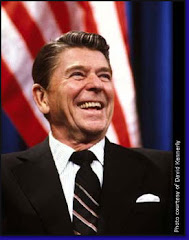
Ronald Wilson Reagan is the president born in February(6th) that Americans are most familiar with.  That is because most of America lived through his two term presidency.  Reagan was an effective chief executive who restored patriotism in America.  Reagan never thought of himself as a politician. He never lusted for power or elective office. He preferred to see himself as a simple citizen who had been called upon to come to the aid of the nation he so loved. His mission, as he saw it, was to free his fellow citizens from the clutches of an overreaching federal government, and to rid the world of the tyranny of Communism.  Reagan left the White House with the highest approval rating of any modern president.  He developed Alzheimer's disease and died in 2004.  His greatest legacy is his hard line stand against the Soviet Union and the Eastern block literally brought down communism in those countries. 

Most Americans know something about Abraham Lincoln.  He is often cited as being our greatest president.  Lincoln is given credit for saving the nation and that may very well be true, but what most Americans do not know is that Lincoln was the first president to greatly expand the powers of the presidency.  Lincoln went to war without a declaration of war by Congress.  He believed the Executive branch of government was not subordinate to Congress or the courts.  He said that in times of crisis or war the President is literally responsible for the well-being and survival of the nation. Lincoln's legacy was his ability to energize and mobilize the nation by appealing to its best ideals while acting "with malice towards none" in the pursuit of an enduring Union. No president in American history ever faced a greater crisis than Lincoln and no President- before or since- has accomplished as much.

George Washington’s tenure in office set America on a path that has endured now for over 200 years.  He established precedents that have lasted for generations and did more to flesh out the skeleton of the presidential office than anyone could have expected or predicted. As one scholar says, “Washington invented tradition as he went along." His actions, more than those of any other Founding Father, became a part of the "unwritten Constitution."  Washington's established department heads in the new government, setting a precedent for today’s modern cabinet as part of the President's office.  Washington could have become a king of the new country if he had wished, but by his actions and words, he set the standard for two presidential terms. He retired to his beloved Mount Vernon to live out his last years.  Washington hated political parties and career politicians.  He said, “The people must remain ever vigilant against tyrants masquerading as public servants.”  

On Monday as you enjoy the day off, remember we are honoring men who led America in times of crisis.  Instead of just eating a piece of cherry pie or buying new sheets, pass on the reason we are honoring these men to the next generation. 

Monday, February 4, 2013

Give the Auditor more Authority!

Weekly Opinion Editorial
GIVE THE AUDITOR MORE AUTHORITY!
by Steve Fair

Today, the Oklahoma state legislature convenes their 2013 session.  The Governor will deliver the state of the state address to a joint session of the legislature.  Some of the major issues that will likely be addressed this session will be workers compensation reform, education funding, and the reduction or elimination of the state income tax.  When you throw in the water rights battle with Texas, tax credit reform, road and bridge funding, repair of the State Capitol building and prison overcrowding this session will be a busy one.

One area that must be up for discussion if we want good government is accountability.  Oklahoma government needs accountability to its citizens.  Last session a legislative bill that never reached either the Senate or the House floor for a vote would have expanded the role of the State Auditor & Inspector.  The amazing thing was the bill didn’t make its way to the floor because the leadership in the legislature ‘knew it would pass.’  That’s right- they knew that Oklahoma citizens wanted accountability and supported the expansion of the Auditor’s office, but they didn’t allow it to come to up for a vote.  That is not the type of government we need in Oklahoma.  We must have one that is responsive to the citizens.

Currently the Oklahoma State Auditor and Inspector has the constitutional authority to audit every state agency and county government agency.  Many want that expanded to include any organization or group that receives money from Oklahoma citizens in the form of a fee.  That would include the Oklahoma Turnpike Commission, dozens of state regulatory agencies, and many shadow government agencies. 

The opposition to the expansion of the State Auditor’s scope of authority comes from a variety of camps.  One camp argues that giving the Auditor more power would make the office more powerful than any other state office.  They say that while it’s fine for the Auditor to delve into corruption if invited, he shouldn’t be routinely trying to find corruption through regularly scheduled audits.  That is asinine.  The Auditor should be able to go over the books of any agency that gets a dime of taxpayer money- invited or not.  It’s certain that an agency involved in fraud or corruption is not going to invite an outside audit.

Another camp believes that it is growing government if the Auditor’s office is given more authority.  After all if you allow the Auditor to audit more agencies, it’s going to take more personnel and more money.  That is certainly true.  It costs money to audit agencies, but I know of no taxpayer who will complain if the Auditor’s office budget is increased to insure our tax dollars are being spent in the right manner.  In fact, growing the accountability side of government is infinitely more preferable than hiring more bureaucrats in state agencies. 

A third camp believes the Auditor’s office should be appointed.  They advocate taking the vote away from the people and giving the Governor the authority to appoint the Auditor.  If there is one office that must remain accountable only to the people, it must be the Auditor.  While Oklahoma does have eleven statewide elected officials and some of the offices might be candidates for appointment, the Auditor’s office is not one of them.  The Auditor is the people’s watchdog making sure that tax dollars are being spent where they should be and rooting out fraud and corruption in government.

Every statewide elected office in Oklahoma is held by a Republican.  Both chambers of the State legislature are controlled by Republicans.  The State Auditor is a Republican, but one that has pledged to hold his fellow ‘R’s accountable to the people.  It’s time the legislature gave him the authority and the funding to insure we have transparency and accountability in state government.  Call your legislator today and ask them to expand the role of the State Auditor.