Monday, April 1, 2019

All Americans should be concerned about government deficit spending!

Weekly Opinion Editorial
NATIONAL DEBT IS AT CRISIS POINT!
by Steve Fair
     President Donald Trump has some pretty significant accomplishments in his first two years.  He has appointed two members of the SCOTUS.  Unemployment is at a forty nine year low.  Manufacturing jobs in the U.S. are growing at the fastest rate in three decades.  In foreign policy, the POTUS has opened a dialogue with North Korea, moved the U.S. embassy in Israel to Jerusalem, and withdrew from the one-sided Iran treaty.  Trump approved Keystone and Dakota Access pipelines.  The POTUS and Congress passed the largest tax cut in U.S. history.   Few presidents in modern history have accomplished as much as Trump in their first two years.  One thing he hasn’t tackled is the national debt.
     According to USdebtclock.org, The current U.S. national debt is $22 trillion dollars.  That is 76% of the total Gross Domestic Product (GDP)- the highest ever in non-wartime.  The debt equates to $180,000 liability per taxpayer.  The U.S. federal government budget deficit is $6.1 trillion dollars annually and growing.  Last year the federal government spent $4.28 trillion dollars, but only collected $3.37 trillion.  In the past twenty years, federal government revenue collections have increased by 80%, but spending has increased by 148% during that same period.  The interest on the national debt is $479 billion and the interest rate is expected to double over the next four years.
     Two thirds of the national debt is held by the public.  The federal government owes it to buyers of U.S. Treasury bills, notes and bonds.  That includes individuals, companies and foreign governments.  The other one third is the government borrowing from itself.  They raided social security for years, but as baby boomers retire over the next few years that cookie jar is going to become empty.  America’s debt is the largest of any country in the world.  It is about the same as the 28 member European Union.
     During the 2016 presidential campaign, then candidate Trump said he would eliminate the nation’s debt in eight years, but based on the first two years, that is not likely to happen.  He promised to grow the economy by 6% annually, therefore increasing tax revenue and to find waste and to cut government spending.  There has been little cutting of government.  Based on current projections, President Trump will spend at about the same rate as President Obama.
     How does the U.S. national debt affect the average American?  First it slows economic growth.  When the debt to GDP ratio gets over 75% for an extended period, interest rates rise and the dollar starts to lose value vs. other currency.  Consumers pay more for products that are imported.  Food and gasoline prices rise.  The government has to set aside more money to service the interest on the debt and core services are often affected. 
     The national debt issue is not a partisan one.  Members of both Parties must agree that our current rate of deficit spending is not sustainable.  The national debt has reached crisis mode.  President Trump and Congress must address the federal government out of control spending before it bankrupts America.
 

Sunday, March 17, 2019

Is it government's responsiblity to provide health care for their citizens?

Weekly Opinion Editorial
OKLAHOMA HEALTHCARE IN CRISIS!
by Steve Fair
     Governor Kevin Stitt has requested that Oklahoma State Auditor & Inspector Cindy Byrd audit the Oklahoma Health Care Authority (OHCA) on Medicaid enrollment in the state from 2015-2018.     The audit requests the auditor determine 1) if the OHCA is meeting the mandatory requirements for eligibility for the Medicaid Children’s Health Insurance Program (CHIP), 2) if those enrolled in the CHIP program meet the requirements for enrollment, and 3) if the OHCA is processing and removing those who aren’t eligible for the program.   
     “It is important that we ensure our resources are supporting those in our state that need it the most,” said the governor. “States across the nation have already completed Medicaid audits and found significant savings because of it. I believe this audit will allow us to continue to be transparent and efficient with taxpayer dollars while also ensuring we are providing a safety net for the most vulnerable in Oklahoma.”
      Medicaid is a federal and state entitlement program that provides medical benefits to low-income individuals who have no or inadequate health insurance coverage. In 2019, the federal government is funding 62.38% of Oklahoma Medicaid, aka SoonerCare, and Oklahoma taxpayers the other 38%. 
     During his campaign for governor, then candidate Stitt said he opposed the expansion of Medicaid, but that may not still be the case.  At a news conference less than two weeks after being sworn into office, Governor Stitt said he might expand it, but needed to know more about it(Medicaid), which is probably why he requested the audit. 
      Clearly Oklahoma has a health crisis.   According to the United Health Foundation, Oklahoma is one of the unhealthiest states in the country with obesity being a major factor.  It’s no wonder we are fat since the state meal is fried okra, cornbread, barbecue pork, squash, biscuits, sausage and gravy, grits, corn, chicken fried steak, black-eyed peas and pecan pie.
      One in seven Oklahomans are uninsured, which is one of the highest rates in the U.S., but doesn’t that speak more to individual responsibility than government intervention?  Is it Oklahoma taxpayers responsibility to provide health care coverage to those who can’t afford it?   It would seem that is the universal consensus, but when does a hand up become a hand out? 
     It’s a fact Oklahoma rural hospital facilities are struggling and are closing because many of those they serve are uninsured or underinsured, but is it the responsiability of hardworking Oklahoma taxpayers to pay the bill?  That’s a tough question and there is no easy answer, but last week the governor signed a bill giving him authority to hire and fire the head of the OHCA.  Now instead of an appointed board overseeing the agency, the governor can act unilaterally.  If the audit reveals negligence in handling the CHIP program, will that result in policy and/or personnel changes at the OHCA?   
     The problem with expanding Medicaid in the Sooner state is twofold: (1) There is no guarantee the feds are going to continue to provide matching monies for the program, and (2) Once someone gets on the program, they tend to become dependent on it.  It is next to impossible to pull back a government program.  Governor Stitt should proceed with caution when dealing with Oklahoma healthcare and the expansion of Medicaid.
 

Friday, March 15, 2019

GOVERNMENT IS NOT A BUSINESS- IT IS NOT AN OLIGARCHY!

Weekly Opinion Editorial
COLLABORATION, NOT CONSOLIDATION!
by Steve Fair

      On Wednesday, Governor Kevin Stitt signed three House and two Senate bills that gave him the power to hire and agency directors at five of the largest state agencies: the Department of Corrections, the Oklahoma Healthcare Authority, the Department of Transportation, the Office of Juvenile Affairs, and the Department of Mental Health.  The five bills had emergency provisions, so they go into effect immediately. 
     Before the bills were passed and signed into law, the five agencies were guided by individual boards and commissions.  Stitt pledged during his campaign that he would push for the governor to have more power in the hiring of agency heads, saying the board system insulated agency heads from voters.  “Oklahomans want three things: they want accountability, transparency and they want results,” Stitt said at the signing ceremony while flanked by seventy lawmakers. 
     First, empowering the governor to hire and fire top agency directors will clearly be more efficient than the old method.  It theoretically does make the larger state agency heads more accountable to voters.  Under the new system the only person between them and the voter will now be the governor.  However, that begs two questions: “why have a board at all if it has no say in the agency’s staffing and budgeting?   Is the board just an advisory body with no real power?  Under the old system, each agency had boards of varying size, all with members appointed by the governor to a term.  A new governor couldn’t just fire the board and start over.  They had to work with the existing board, many times with those who had been appointed by their predecessors, to make changes in state agencies.  Many of the appointments were political patronage and the board members were not qualified to be there.  Under the new system, the boards will be made up of people who have little power and no authority over the agency they are supposed to be overseeing.
     Second, this consolidation of power should be voted on by the citizens of Oklahoma.  If granting the governor more power is a good thing, then amend the State Constitution to permanently grant that power.  That must be done through a vote of the people.  The five bills signed this week can be rescinded by a future legislature.  A Republican legislator recently said that would be what would happen if a Democrat governor was elected.  But expanding the power of the governor can’t be personality or Party driven.  It is either the right or wrong thing to do.   
     Third, government conducts business, but it is not a business.  It doesn’t generate revenue- it collects it.  Government should be conducted in a businesslike manner, but a business is only accountable to its stakeholders, not to society as a whole.  It is an oligarchy.  Government is accountable to everyone in its jurisdiction.  It’s important to understand the difference.
     Consolidation of power was something America’s founders warned against.  They set up a system of government that relies on a multitude of counselors, not single personalities or elected leaders.  Clearly, the most effective, efficient form of government is a benevolent dictatorship, but that only works until the good dictator is gone.  Oklahomans need a fourth thing Governor- Collaboration- to really turnaround.
 

Monday, March 11, 2019

WHY ARE WE HAVING HEARINGS IF THEY DON'T PLAN TO IMPEACH?

Weekly Opinion Editorial
PELOSI DOESN’T SUPPORT IMPEACHMENT?
by Steve Fair

           Only two presidents have been impeached in our nation’s history- Andrew Johnson in 1868 and Bill Clinton in 1999.  Neither were removed from office.  Richard Nixon resigned in 1974 to avoid impeachment.   The U.S. Constitution (Section 4, Article 2) allows Congress to impeach and remove a president from office if they believe the president has committed treason, bribery high crimes and misdemeanors.  The first two are pretty clear, but the later two were intentionally vague because the founders wanted to give Congress some latitude.
     President Clinton was impeached by the U.S. House for perjury, obstruction of justice, and abuse of power after he lied about his affair with Monica Lewinsky.  The vote to remove him from office fell short with only 50 of the 55 Republicans voting for removal.  67 Senators must vote for removal.
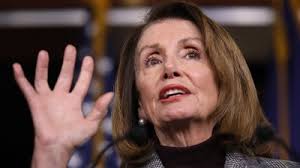
      Since Democrats took control of the House last November, there has been talk of impeaching President Trump, but on Monday Speaker of the House Nancy Pelosi   said she doesn’t support impeachment.    “I’m not for impeachment.  Impeachment is so divisive to the country that unless there’s something so compelling and overwhelming and bipartisan, I don’t think we should go down that path because it divides the country.  And he’s just not worth it,” Pelosi told the Washington Post.   Evidently Pelosi hasn’t told her Democrat caucus.  They continue to call witnesses and conduct public hearings with their stated objective to impeach.  Will the hearings stop?  Of course not!  The hearings are only being conducted to energize the Democrat political base. 
     Pelosi told the Post she believed Trump is not fit ethically, politically or intellectually to run the country, but yet she won’t support impeachment?  Three reasons Pelosi doesn’t want to push for impeachment of President Trump:
     First, she doesn’t have the votes in the U.S. House to impeach.  Democrats have just a 35 seat margin and there are 27 Blue Dog Democrats(Conservative Ds that vote with the Rs), which makes impeachment not very likely.   
    Second, if impeachment were accomplished in the House, the trial in the Senate would be great for Republicans.  Removal would be difficult at best since Republicans control the Senate and getting two thirds to vote to remove would be next to impossible.  The only hope Democrats have in removing Trump is if he really does commit treason, take a bribe or commits a crime.  They need Republicans to turn on him. 
     Third, impeachment would be a foolish political move if the outcome is not certain.  Pelosi recognizes that she will need Republicans to turn on the POTUS to impeach.  While many Republicans question Trump’s antics, they aren’t to the point they would vote to impeach or remove. 
      When Republicans impeached President Clinton, polls showed most Americans didn’t support the procedure, but Speaker Newt Gingrich forged ahead.  Speaker Pelosi seems to have learned from history and is trying to avoid that mistake.  But is she continues to hold public hearings to fire up the liberal base that may be as big of mistake, because it also fires up Trump supporters.