Friday, February 25, 2022

END OF A FIFTY YEAR PUBLIC OFFICE CAREER!

 Weekly Opinion Editorial
RELIABLE INHOFE RETIRES!

by Steve Fair

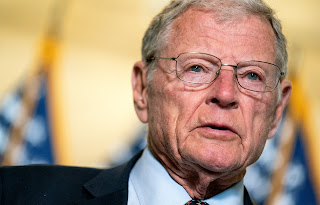
      On Friday, Senator James Mountain Inhofe announced his resignation from the United States Senate effective the end of the 117th Congress (1/3/2023).  Inhofe, 87, has served in the upper chamber since 1994.  Prior to that, he served three terms in the U.S. House.  All told, Inhofe has served 35 years in Washington.  Prior to that, he served as mayor of Tulsa for six years and prior to those ten years in the Oklahoma legislature.  In total, Inhofe has spent over 50 years in elective office.

     During his time in the Senate, Inhofe served as Chairman of the Committee on Environment and Public Works and the powerful Armed Services Committee.  He first came to national attention in 1993, while in the House when Inhofe led the effort to reform the discharge petition rule.  House leadership  used the process to bottle up bills in committee and keep them from getting a floor vote.  Inhofe has been a vocal critic of those who believe in man-made climate change and global warming.  He wrote a book entitled, “The Greatest Hoax: How the Global Warming Conspiracy Threatens Your Future.”

     Like Senators Boren, Nickles and Coburn, Inhofe by resigning before March 1st saved Oklahomans from a special election.  The special election to fill the remaining four years in Inhofe’s term will be held as the same time as this year’s general election.   Both of Oklahoma’s U.S. Senate seats will be up in November.  Expect the Republican field to replace Inhofe to be crowded. 

     In an interview, Inhofe endorsed his chief of staff, Luke Holland, to replace him.  He said he would campaign for Holland before the GOP primary, which is June 28th.  Holland is a fourth generation Oklahoman who grew up in Bartlesville and already has a website.  Former Oklahoma Speaker of the House T.W. Shannon and Congressmen Kevin Hern and Mark Wayne Mullin are also potential candidates.  Three thoughts about Senator Inhofe:

     First, Senator Inhofe is conservative.  He has been consistently ranked as one of the most conservative members of the Senate.  He is unapologetically pro-life and pro second amendment.  He is a strong and reliable supporter of the military.  The military will miss him and his staunch loyalty.

     Second, Senator Inhofe is trying to pass the baton.  His endorsement of Holland is meant to keep his agenda and political views alive.  It remains to be seen if that works in 2022.  It didn’t work in 2003, when Senator Don Nickles resigned.  Senator Inhofe endorsed and campaigned for then OKC Mayor Kirk Humphries.  When former Congressman Tom Coburn got in the race, it spoiled Inhofe’s plan.  Coburn easily won the Republican primary.    

     Third, Inhofe wasn’t afraid to disagree.  In 2010, when earmarks were banned in the Senate, Coburn called earmarks nothing more than re-election tokens.  Inhofe said elimination of earmarks was a phony issue.  Coburn said earmarks were the gateway drug to overspending.   The GOP Senate voted to eliminate earmarks in 2010(Remember the ‘bridge to nowhere’).

     In February 2021, the Democrat controlled U.S. House voted to bring back earmarks.  In April 2021, the Senate followed their lead.  Inhofe and several other Republican Senators voted to bring earmarks back.  Coburn’s successor, Senator Lankford said: “The problem is earmarks are one of the worse of the worst ways that Congress spends taxpayer dollars.  They are often a misuse of funds and become a way to buy votes from other legislators on bills they normally wouldn’t vote for.”  Lankford voted no, Inhofe yes on bringing them back.

     The issue of earmarks is a heavily debated topic by Republicans.  Former President Trump favors earmarks.  Most fiscal conservative Republicans oppose earmarks for the reasons listed above.

     Senator Inhofe will be missed.  He was a stable, consistent, reliable voice for Oklahoma in Washington for 35 years.  British statesman Benjamin Disraeli said, “the secret of success is constancy of purpose.”  Jim Inhofe knew and remained focused on his purpose.  Oklahomans were blessed to have Senator Inhofe represent them.


Sunday, February 20, 2022

PUTIN FACES CHALLENGES WITH UKRAINE- IT WON'T BE EASY!

 Weekly Opinion Editorial


UKRAINE EXPLAINED

by Steve Fair


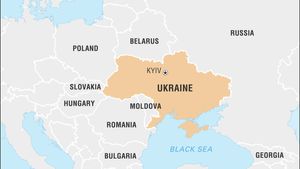
     Ukraine is a country in eastern Europe.  It is slightly smaller than Texas in land mass and has a population of 41 million people.  It borders Russia to the east and Poland and Hungary to the west.  Ukraine was a part of the USSR, but gained its independence in 1991, following the dissolution of the Soviet Union.  Ukraine is the poorest country in Europe and suffers from a high poverty rate with wide spread corruption. 

     Ukraine maintained a friendly relationship with Russia until 2014, when Russia, under Vladimir Putin, ‘annexed’ Crimea, a peninsula along the northern coast of the Black Sea and a part of Ukraine.  Crimea has a population of 2.4 million, made up of mostly ethnic Russians and Ukrainians.

    After the Crimea invasion, Ukrainians hearts hardened against Russia and Putin.  They became friendlier to NATO and the western world.  Why does Putin want Ukraine? Three reasons:

     First, it’s about geography.  Moscow needs warm water open sea lanes.  Russia’s inability to have direct access to the oceans have long been a weakness.  Ukraine, with eighteen sea ports, has the most powerful sea port potential among all countries of the Black Sea.  In the event of a war, the Russian navy currently can’t get to the Baltic Sea because NATO controls the Skagerrak Strait.  In many ways, Russia is land locked and Putin needs Ukraine for military and commercial shipping reasons.

     Second, it’s about natural resources.  Ukraine has high concentrations of coal, iron, oil, natural gas, manganese, graphite, titanium, nickel, and timber.       For centuries, Ukraine has been known as the ‘breadbasket of Europe.’  It is home to twenty five percent of the world’s super-fertile or black soil.  An area larger than Italy is currently cultivated.  Ukraine is among the top three grain exporters in the world. Ukraine is one of the top three exporters of organic products to the EU.  In the past 30 years they have struggled getting their products to other countries, but that is changing.  Putin needs Ukraine to feed Russia and to provide oil/gas and other resources to Russia. 

     Third, Putin believes Ukraine is a part of Russian.  “As the wall that has emerged in recent years between Russia and Ukraine, between the parts of what is essentially the same historical and spiritual space, to my mind is our great common misfortune and tragedy. These are, first and foremost, the consequences of our own mistakes made at different periods of time. But these are also the result of deliberate efforts by those forces that have always sought to undermine our unity,” Putin wrote last year.  He has called Ukraine the ‘crown jewel of Russia.’  Putin believes it is his duty to reunite the old USSR.  He wants that as his legacy and he certainly doesn’t want a member of NATO on his border (Ukraine is not a member of NATO yet). 

     If Putin invades Ukraine, it will not be a cake walk.  Ukraine has the largest military force in Europe- over 200,000 soldiers—and they have vowed to fight.  “Do not doubt, the Armed Forces are absolutely ready to fight back and will not give up the Ukrainian lands!” Ukrainian Defense Minister Oleksii Reznikov said.   Putin faces opposition at home on the planned seizing of Ukraine.  Back in 2014, he faced opposition when he annexed Crimea. 

     Unfortunately, public opinion doesn’t mean much in a totalitarian, authoritarian, repressive form of government where elections are rigged, leaders don’t follow founding documents and do what they want.  Americans are learning to relate.


Sunday, February 13, 2022

INSTILLING HOPE IN STATE WORKERS NOT A FUNCTION OF GOVERNMENT- THAT IS THE HOLY SPIRIT'S JOB!

 Weekly Opinion Editorial


A FORK IN THE ROAD!

by Steve Fair

     On Monday February 7th, Governor Kevin Stitt delivered his fourth ‘state of the state’ address to a joint session of the Oklahoma legislature.  The governor said Oklahoma is economically in better shape than the rest of the country.  Stitt claims 27,000 people have moved to Oklahoma in the past two years, and that 40,000 more Oklahomans have jobs than when he was inaugurated as governor (2017).  He said Oklahoma’s unemployment is down to 2.3%, lowest in state history. 

     The governor said the Sooner state is at a crossroads, a fork in the road, on public policy.  According to Stitt, one path leads toward Oklahoma becoming a Top Ten state, the other fork, the path of a jigsaw puzzle of jurisdiction. 

     Stitt outlined four checkpoints on the road to Oklahoma becoming a top ten state.  Those checkpoints are: (1) Driving hope for all Oklahomans, (2) Protecting Oklahomans and their way of life, (3) Making Oklahoma more business friendly, and (4) Delivering taxpayers more for their money. 

     Stitt said he supports school vouchers, an investment of $13 billion dollars in state infrastructure in the next decade, a revamp of the state’s initiative petition process, and consolidation of the state’s law enforcement agencies into one unified command structure.  During his address, Stitt quoted motivational author Jim Collins and Oklahoma native son Will Rogers, and concluded his remarks by thanking God for being an Oklahoman.  Three observations:

     First, Oklahoma has a long way to go to become a top ten state.  The Sooner state ranks in the bottom third of states in per capita income.  It ranks high in prison population, low in mental health services, high in obesity, and low in educational outcomes.  It will take decades before the state becomes top ten unless radical major changes to policy are implemented.  Oklahoma government hasn’t shown the political willpower to make those radical changes. 

     Stitt’s idea of parents controlling their tax dollars and being able to enroll their child in a school that might give the child better outcomes is a start, but it appears that is dead on arrival.  Oklahoma Speaker of the House Charles McCall, (R-Atoka) said on Thursday he has no intention of hearing SB #1647, authored by Senate President Pro Tempe Greg Treat, (R-OKC).  McCall calls SB #1647 a public-school killer for rural Oklahoma.  Treat has vowed to double down on the proposal.  We will see who wins this battle.

     Second, hope is a good thing, but it will not make Oklahoma a top ten state.  Hope is the anchor of the soul for a Christian.  It looks back to what Christ did on the cross and forward to when He will return.  Secular hope is positive thinking, good wishes, and a crossing of the fingers.  It has no place in public policy.   Government should be non-emotional, impassive and logical, not seeking to motivate citizens with feel good philosophy.  Instead of training every state employee in the next two years on how to apply the ‘science of hope’ in their agencies, train them on how to fundamentally do their job more efficiently and save taxpayers money.  Having happy, well-adjusted, hopeful bureaucrats isn’t the job of the government.

     Third, Oklahomans were sold a bill of goods on the medical marijuana state question.  Oklahomans approved it based on a lack of information and misinformation.  Stitt proposes changing the initiative petition process, but gave no details as to how he wants it changed.  Policy makers should remember that changes made to the process affects everyone’s liberty, not just the liberal out of state concerns Stitt mentioned in his address.  Improvement in ballot language, and full disclosure in what State Question implementation will cost taxpayers would be a major improvement.  More and better information before the vote might prevent passage of proposals that result in ‘unintended consequences.’

     Governor Stitt said Oklahoma has come to a fork in the road on public policy.  Yogi Berra famously said, “When you come to a fork in the road….take it.”  Oklahoma government usually does just that. 


Sunday, February 6, 2022

IN A STATE FAMILAR WITH POLITICAL SCANDAL, EPIC MAY BE THE BIGGEST!

 Weekly Opinion Editorial


A THING OR TWO ABOUT SCANDALS!

by Steve Fair

     Oklahoma has a population of 4 million people- 1.2% of the total U.S. population- but when it comes to political scandals, the Sooner state has more than their fair share.  Just 11 governors have been impeached in U.S. history across all 50 states.  Oklahoma has removed 2- Henry Johnston and Jack Walton, both in the 1920s.  Corruption hasn’t been limited to governors.

     In 1965, three Oklahoma Supreme Court justices- Nelson Corn, N.B. Johnson, and Earl Welch- took a $200,000 bribe to reverse a tax claim against an investment company.  They were impeached and removed from office.  In 1975, former Governor David Hall was convicted of extortion in federal court shortly after leaving office and served 19 months of a 3-year sentence.   

      In the early 1980s, Oklahoma became the state with the most elected officials ever convicted of a felony in a single scandal.  When it was all over, federal prosecutors had gained convictions of more than 200 people.  110 of the states 231 incumbent county commissioners and 55 former ones were involved in the kickback scheme.  60 of the state’s 77 counties were involved.  Millions of tax payer dollars were stolen and the state’s secondary infrastructure has never recovered. 

     In the 1980s, a state corporation commissioner, Bob Hopkins and a Southwestern Bell attorney were convicted and sentenced in federal court of bribery.   Current Corporation Commissioner Bob Anthony courageously cooperated with the FBI to help expose Hopkins’ corruption, which cost ratepayers millions.  Hopkins wasn’t the first Oklahoma corporation commissioner removed from office.  A.P. Watkins was kicked out in 1915.    

     In 2000, the federal government found corruption at the Oklahoma health department.  A multicounty grand jury found cases of ghost employees on the payroll.  They were primarily people Democrat legislators had used their influence to get on the public dole without performing any work, costing Oklahoma taxpayers millions. 

     The Oklahoma tax commission had a trucking tax scandal in 2003.  In 2004, Insurance Commissioner Carroll Fisher, a Democrat, resigned from office after being charged with embezzlement and perjury.   He wasn’t the first Okie insurance commissioner to be removed from office- Parry Ballard was, back in 1913. 

     In 2008, State Auditor Jeff McMahan, a Democrat, and his wife Lori were convicted in federal court of taking more than $100,000 in illegal campaign contributions.  McMahan served eight years in federal prison.  He wasn’t the first auditor to get booted out- Leo Meyer was back in 1913.

   In 2009, former state representative Mike Mass, a past chair of the state Democratic Party, was sentenced to two years in federal prison for taking kickbacks to divert millions in taxpayer dollars to a gambling machine company and a non-existent dog food production facility.  

     In 2021, Epic Charter Schools repaid state taxpayers $20 million dollars after State Auditor Cindy Byrd’s audit uncovered Epic’s misappropriation of monies from the state legislature.  Byrd has called the misuse the ‘Enron of Education.’ 

    On Thursday, the OSBI concluded their six-year investigation into Epic and on Friday, Oklahoma attorney general John O’Connor said he was turning prosecution over to Oklahoma county DA David Prater.  Three observations:

     First, O’Connor shouldn’t have punted to Prater.  The responsibility of the state AG is to ensure state laws are followed, not dropkick it to a local D.A.  The former operators of Epic, who are under investigation, are politically connected, and have made thousands of dollars of political contributions to candidates- mostly Republican- to keep the money flowing.    Handling a scandal of this magnitude is the responsibility of the AG, not the local DA.

     Second, Oklahoma officials have a history of punting.  Most of the scandals cited above were uncovered and prosecuted by the federal government.  Local Oklahoma officials have historically turned a blind eye to corruption by their fellow state elected officials.  It takes courage to go after people you know, but if an elected official doesn’t have the iron rail up the shirt tail, perhaps they should go home. 

     Third, Oklahoma taxpayers are the real victims in a political scandal.  Oklahoma’s secondary roads and infrastructure is in the shape it’s in because the state had crooked politicians and people who were funding them.  They stole tax dollars to line their own pockets.  Kickbacks, bribes, and payola by elected officials have a long history in Oklahoma. Preventing, exposing and stopping corruption should be the job of every elected official.  Oklahomans should elect people they can turn their back on.  

     Epic Charter School’s misuse of millions of tax dollars is the biggest political scandal in the history of a state that knows a thing or two about political scandals. Taxpayers should demand those responsibility be brought to justice.  It should be the highest priority of the leadership in the state, not treated as unremarkable.  After all, it’s our money!


Sunday, January 30, 2022

GRAHAM HAS LEVERAGE IN SCOTUS NOMINATION PROCESS BUT HIS TRACK RECORD IS NOT CONSERVATIVE!

 Weekly Opinion Editorial


BIDEN’S TIGHT ROPE!

by Steve Fair

     Last week, U.S. Supreme Court Justice Stephen Breyer announced his retirement from the high court at the end of the current court session.  Breyer, 83, was nominated to the SCOTUS by former President Bill Clinton and has served 28 years.  He has been a reliable liberal vote on the court. 

     Breyer’s retirement gives President Joe Biden his first SCOTUS nomination.  Biden has vowed to nominate the first Black woman justice to the court.  Biden’s short list reportedly includes three federal court of appeals judges, a federal district court judge, a law professor and a civil rights attorney.  Three observations:

     First, there is no margin for error with this nomination.  The U.S. Senate confirms the president’s nominee.  The Senate is spilt 50 Ds/50Rs.  Vice President Harris casts the tie breaking vote, which gives Democrats majority control.  A power sharing agreement between Senators Schumer and McConnell, has each Senate committee with equal numbers of Democrats and Republicans.   Before the vote comes to the floor, the nominee must be passed by the judiciary committee.  If Republicans hold the line, they could hold up a nominee in committee and prevent a floor vote. 

     In 2016, former President Obama nominated current Attorney General Merrick Garland to the high court, but the nomination never got to the floor because Republicans controlled the Senate.  In 2022 the Democrats in theory control the Senate, but in practice the chamber is evenly spilt.  That means President Biden must include Republicans in his discussion on a nominee and not alienate any Democrats.  With two Democrat Senators recently voting with Republicans to block some of Biden’s signature legislation, it makes getting a nominee confirmed a challenge for Biden.  He is walking a tight rope to get a nominee confirmed before mid-terms.

     Second, affirmative action shouldn’t be a factor in the nomination.  The nomination is Biden’s sovereign decision, but he should be looking for the most qualified candidate, no matter their race, sex, creed or color.

     Senator Roger Wicker, (R-MS) said: "The irony is that the Supreme Court is at the very same time hearing cases about this sort of affirmative racial discrimination (college admissions) while adding someone who is the beneficiary of this sort of quota."

     Senator Lindsay Graham, (R-SC) disagrees with his colleague.  Put me in the camp of making sure the court and other institutions look like America.  Affirmative action is picking somebody not as qualified for past wrongs.  Michelle Childs is incredibly qualified.” Graham told Politco.        

     Graham is promoting Judge Michelle Childs, a U.S. District judge in his home state of South Carolina.  Childs, 55, rulings have been reliably liberal and she is listed on Biden’s short list.  Graham is the on the judiciary committee (Wicker isn’t) and he could be the key vote to getting a nominee through committee.   “She’s one of the most decent people I’ve ever met.  I cannot say anything bad about Michelle Childs.  She’s an awesome person,” Graham said. 

     Likeability and temperament are important traits, but the job of judiciary committee members is to vet potential justices on how they will rule, not grade their personality.  Would Childs rule based on a literal interpretation of the intent of the writers of the Constitution?  That is highly unlikely based on her rulings in South Carolina.

     Third, Biden is being urged to act with a sense of urgency.  Democrats are worried because Biden has a record of missing deadlines.  Former Senator Majority Leader Tom Daschle, (D-SD), said, “You don’t know what circumstances may bring, whether it’s the loss of a member(Senator) or somebody crossing other to the other Party. That should be very much on their minds right now.”  An illness, death or retirement of a member could derail a nominee being confirmed. 

          In 2020, Justice Amy Coney Barrett was confirmed within a month of nomination, but Republicans controlled the U.S. Senate.  Biden’s nominee will necessarily require at least one Republican on the Senate judiciary committee to vote with the Democrats to move to a floor vote. 

     Senator Graham may have as much to say who the SCOTUS nominee is as the president.  Graham’s spotty, unreliable, inconsistent record on conservatism has been disappointing to say the least.  Expect it to continue through this tight rope process.


Sunday, January 23, 2022

BIDEN'S PRESS BRIEFING LIKE HIS POLICIES- PUZZLING AND CONFOUNDED!

 Weekly Opinion Editorial

DEER IN THE HEADLIGHTS

by Steve Fair

     On Wednesday, President Joe Biden held a rare news conference that ran nearly two hours.   According to the American Presidency Project at the University of California, Biden has held only nine news conferences in his first year in office.  That is less than half of President Trump, who had twenty-two his first year and one third of President Obama, who held twenty-seven his first year in office. After listening the POTUS for two hours, it’s clear why he doesn’t face the press.  His verbal communication skills are lacking and it appears his cognitive function is questionable.  Three observations from the news conference:

      First, Biden continues to blame Republicans for his inability to get his agenda passed by Congress. “What are Republicans for?”, Biden asked during the news conference.  Well, Republicans are for having safeguards at the ballot box like voter ID to insure those who are voting are who they say they are.  They are for working to ensure votes are counted correctly and honestly.  The voter rights act undermines both of those principles.  It puts the federal government in charge of elections, which is unconstitutional.   

     The reason Biden hasn’t been able to get his agenda passed is not the Republican Party’s fault.  The blame belongs to Democrat leadership who cannot hold their caucus together.  Democrats control both chambers of Congress by narrow margins.  On Wednesday, two Democrat Senators- Sinema of Arizona and Manchin of West Virginia voted with the fifty Republican senators to defeat the controversial so-called voter rights bill.   Biden wants a bipartisan coalition to pass his ideas, but his ideas are so polarizing that even some in his own Party can’t support them, his outrage is misdirected.

     Second, Biden’s foreign policy is murky.  During the news conference Biden said, “I think that Russia will be accountable if it invades(the Ukraine) and it depends on what it does.  It’s one thing if it’s a minor incursion, and then we end up having a fight about to do and not do,” the POTUS said.   One reporter questioned why Biden was giving Vladimir Putin permission to invade the Ukraine.  Biden tried to walk back the statement in his answer and the White House issued a statement after the news conference that contradicted what the POTUS had said at the podium.  President Biden has been critical of President Trump’s foreign policy.  But Trump’s foreign policy had more clarity and he never publicly granted Russia permission to invade a country.

     Third, Biden admitted inflation is a problem.   “We have faced some of the biggest challenges that we’ve ever faced in this country these past few years.  We need to get inflation under control,” Biden said.  The POTUS went on to blame consolidation in certain market sectors for fueling inflation.  “A handful of giant companies dominate the market in sectors like meat processing, railroads, shipping and other areas.  That isn’t the only reason we have inflation, but it is one reason,” Biden said.  What?

     Consolidation in business has been going on for thirty years.  Most of it was caused by government regulations and tax laws that forced small family farms, food processors, retailers and hundreds of other businesses to sell out to larger concerns.  The lack of diversification in 2022 was created as the result of bad government policy in 1970.  Blaming the monster, you created for the terror it creates is dimwitted and myopic.    

     Biden appeared to be confused, befuddled, and baffled during the two-hour briefing.  He looked like a deer in the headlights.  Those who have known Biden for decades say it was Biden being Biden.  That explains why his handlers keep him away from the press, but the POTUS has a moral obligation to regularly address the American public.  It would be nice if it would was in an understandable, logical way, but that is probably too much to ask. Biden’s press conferences are like his policies-puzzling, and confounded.   


Sunday, January 16, 2022

SCOTUS GOT IT HALF RIGHT!

 Weekly Opinion Editorial


by Steve Fair


     On Thursday, the U.S. Supreme Court(SCOTUS) ruled unconstitutional President Joe Biden’s executive order requiring large businesses(more than 100 employees) to insure their employees were vaccinated and tested.   

     "Although Congress has indisputably given Occupational Safety and Health Administration( OSHA) the power to regulate occupational dangers, it has not given that agency the power to regulate public health more broadly. Requiring the vaccination of 84 million Americans, selected simply because they work for employers with more than 100 employees, certainly falls in the latter category," the majority opinion said.  The vote was 6-3 with the three liberal justices-Breyer, Sotomayor and Kagen- dissenting. 

     In the minority opinion, the three wrote:  "When we are wise, we know not to displace the judgments of experts, acting within the sphere Congress marked out and under Presidential control, to deal with emergency conditions," they wrote. "Today, we are not wise. In the face of a still-raging pandemic, this Court tells the agency charged with protecting worker safety that it may not do so in all the workplaces needed. As disease and death continue to mount, this Court tells the agency that it cannot respond in the most effective way possible."

     In a second ruling regarding vaccine mandates, the SCOTUS allowed the Centers for Medicare and Medicaid Services to require health care workers to be vaccinated at facilities that receive federal monies.  In that case, the vote was 5-4, with Chief Justice John Roberts and Justice Brett Kavanaugh joining the three liberals (who vote as a block) to form the majority. 

     The majority opinion concluded the Secretary of Health and Human Services(HHS) routinely imposes conditions of participation (COPs) relating to the qualifications and duties of healthcare workers.  They said the vaccine mandate fell into the duties of HHS. Three observations:

     First, the SCOTUS got the OSHA ruling correct.  Telling private employers, the conditions of employment (COPs) for their employees is not a function of the federal government.  The feds are already overregulating private business to death.  Establishing guidelines on workplace safety is why OSHA was created in 1970, but requiring employee jabs has never been a function of that agency.  Biden’s executive order was over the top- even for the federal government.

     Second, the SCOTUS got the HHS ruling wrong.   Holding hospitals hostage by withholding federal monies if workers don’t get vaccinated is nothing short of extortion.  Healthcare workers should have the same liberty and choice as the private sector employees in the OSHA case.  They should be allowed to make up their own mind about the vaccine in the same way.  This ruling will create more pressure on the health care system in the U.S. as hospital operators across the country expect it will create manpower shortages. 

     Third, the spilt decision by the SCOTUS on similar cases is puzzling.  Why did Justices Roberts and Kavanaugh vote for liberty for some Americans, but not others?  They cited the authority/mission of the federal agency-HHS- as their justification for requiring the jab for healthcare workers.  Were the ‘rights’ of Americans working in the healthcare sector considered?  It appears not.  When the high court places the duties/mission of a federal bureaucratic agency over the rights of individual Americans, they are violating their commitment to rule based on the Constitution.

     America’s republic system of self-government empowers individual citizens.  The United States government is given power by the people, not the other way around.  The founding document- the Constitution- is the rule book.  It states every American has the right to life, liberty and the pursuit of happiness.  When a citizen’s rights or liberty is taken away- for whatever purpose- it violates the rule book.  When the liberty of one is taken away for the overall good of the whole, America ceases to be America.