Sunday, March 27, 2022

"The words of a president matter. They can incite!"

Weekly Opinion Editorial 


by Steve Fair


     “The words of a president matter.  They can move markets.  They can send brave men and women to war.  They can bring peace,” then presidential candidate Joe Biden said at a presidential election debate in 2020.   

     Regarding the January 6th Capitol incident, Biden said about President Trump: “The words of a president matter, no matter how good or bad that president is. At their best, the words of a president can inspire. At their worst, they can incite.” Biden tried to paint President Trump as an undisciplined, unpredictable loose cannon.

     Trump did go off script and say things his aides and advisors cringed at, but none of his unscripted moments were nearly as potentially damaging to America as Biden’s remarks at the end of a 27-minute speech on Saturday.  Speaking about Russian President Vladimir Putin, President Biden said, ”For God’s sake, this man cannot remain in power.”  The Kremlin immediately reacted.  Kremlin spokesman Dmitry Peskov told state news agencies, “That’s not for Biden to decide. The president of Russia is elected by Russians.” 

     Biden’s handlers immediately went to work trying to explain what he said wasn’t what he meant. “The president’s point was Putin cannot be allowed to exercise power over his neighbors or the region.  He wasn’t discussing Putin’s power in Russia or suggesting a regime change,” the White House official interpreter of presidential speeches said. But that was what the president said, so which is it?  Perhaps President Biden should consider having an interpreter translate at his press conferences to save time.   Three observations:

     First, President Biden gave Putin a huge gift.  Putin has contended the West is trying to interfere in Russian policy and wants to overthrow the Kremlin and destroy Russia.  Putin, no doubt, will use Biden’s gaffe/blunder as propaganda to reinforce the idea the western world hates Russia’s way of life. 

     Second, Biden’s statement is not consistent with stated U.S. policy. Secretary of State Antony Blinken has said regime change is not part of the strategy the United States, NATO and their allies have discussed in regard to Putin’s invasion of Ukraine.  Biden’s statement contradicts that public policy, which has foreign policy experts and allied leaders scratching their heads.

     Third, Biden’s statement could change Putin’s war strategy.  If Putin believes Biden secretly wants him out of power, then he might use every means at his disposal to stop that from happening. Putin has some significant means.  He has his finger on 6,000 nuclear warheads.  By comparison, the United States has 4,000 nukes.  If Putin believes Biden is trying to take him out of power, he might do some desperate things.  Desperate men do desperate things.

     American author Nathaniel Hawthorne said, Words—so innocent and powerless as they are, as standing in a dictionary, how potent for good and evil they become, in the hands of one who knows how to combine them!"  Joe Biden has shown he does not know how to combine them.  He’s right- the words of a president do carry a lot of weight.  They move markets- they send men and women to war- they bring peace.  That’s why the president shouldn’t impromptu suggest the overthrow of a foreign government’s leader, especially one with 6,000 nukes.  To quote Joe Biden- those words can incite.


Sunday, March 20, 2022

The attack on human dignity is when culture believes it's acceptable to kill children in the womb!

 Weekly Opinion Editorial

CRISIS POINT!

by Steve Fair

     Last week, the Oklahoma state Senate approved several pro-life bills.  Senate Bill #1503(SB#1503) is a Texas style six-week abortion ban that would take effect immediately after it is signed by the governor. Senate Bill #1555(SB#1555) modifies the state’s trigger ban allowing pre-Roe v. Wade statutes to take effective if and when the U.S. Supreme Court overturns Roe v. Wade.  SB#1552(SB#1552) would allow the State Department of Health to enter into contracts with private organizations for providing alternatives to abortion.  Oklahoma is the second state- after Idaho- to vote a six-week abortion ban modeled after Texas. 

     There were also two Joint Resolutions passed by the Senate.  Joint Resolutions, if passed by both chambers, send the resolution to a vote of the people.  SJR#37 would place a constitutional amendment in the state constitution eliminating a right to any abortion in Oklahoma.  SJR#17 would place a constitutional amendment in the state constitution conferring full personhood- and the rights that come with it- from conception.  All the bills now move to the state House for consideration. 

     The American Civil Liberties Union(ACLU) chapter says these bills would ‘decimate abortion access in the region.’   According to the ACLU, Oklahoma has been a ‘lifeline’(interesting description) for Texans seeking abortion after Texas passed their six-week abortion ban.  The ACLU claims half of all Texans who went out of state for an abortion in the last six months came to the Sooner state.  

    “Since the grave error of Roe v. Wade, states like Oklahoma have worked diligently to enact measures to protect the lives of the unborn.  These bills passed by the Senate will further that work and will help sustain a culture in our state that values and protects life at all stages.  I hope federal legal precedents allowing abortion are overturned, restoring Oklahoma’s ability to prohibit abortion once again,” Senate President Pro Tempore Greg Treat, (R-OKC)

     “Oklahomans deserve access to abortion, without obstacles, stigma, or harassment, but local politicians are emboldened after witnessing the ongoing attacks across the country to time-sensitive, compassionate health care. Make no mistake, our state is at a crisis point in the fight to protect abortion. Forcing people to continue a pregnancy by taking away their ability to get an abortion is dangerous and a violation of their rights. It is an attack on human dignity. At every point in a pregnancy, a person’s health, not politics, should drive their medical decisions," Tamya Cox-TourĂ©, executive director, ACLU of Oklahoma, said in regard the pro-life bills.  Two observations:

     First, abortion is a violation of the unborn baby’s right to live.  The U.S. Constitution guarantees the right to LIFE, liberty and the pursuit of happiness.  You can’t have liberty and the pursuit of happiness without life.  No one has the right to take an innocent life.  The true attack on human dignity and decency is when a culture has reached the level that killing life in the womb is celebrated as a basic right. 

     Second, there is no way to deny abortion is a form of killing.  Science confirms what the Bible says- life begins at conception.  An embryo is not merely a cell with potential, but  a distinct human organism.  It fulfills the four criteria needed to establish biological life: metabolism, growth, reaction to stimuli, and reproduction.  Pro-abortion advocates claim the organism is ‘not a person.’  That is a completely unscientific argument based on their own moral or political philosophy.  Medicine confirms the existence of a child before birth as a distinct human being.  Fetal surgery has become a medical specialty and includes the separate provision of anesthesia to the baby. 

     Oklahoma is at a crisis point on the issue of abortion.  Either the Sooner state becomes a safe haven for the unborn or it continues allowing children in the womb to be killed.  Contact your state Representative and ask them to support the pro-life legislation listed above.


Sunday, March 13, 2022

What's Good For the Goose is Good for the Gander!

 Weekly Opinion Editorial

“GIVE ‘EM A BREAK”

by Steve Fair

      House Joint Resolution #1047(HJR#1047) is authored by Rep. Robert Manger, (R-OKC) and Rep. Tammy Townley, (R-Ardmore) in the House and Sen. Adam Pugh, (R-Edmond) in the Senate.  HJR#1047 would send to a vote of the people a proposal freezing the value of a homestead for individual head of households who are sixty-five (65) years of age or older to not exceed the fair cash value placed upon the property during the first year in which the individual head of household turns sixty-five years of age or older.  It would remove the current maximum income requirement for a senior valuation freeze and make all seniors over 65 eligible.  HJR #1047 unanimously passed the House Rules committee last month.

     Critics of the bill, which include the County Assessors Association of Oklahoma, believe HJR #1047 would give an unnecessary tax break to wealthy seniors.  Proponents of the bill believe it would help many seniors on a fixed income who need the financial help.  Three observations:

     First, HJR #1047 is revenue neutral.  That means it wouldn’t cost taxpayers anything.  HJR#1047 doesn’t ‘eliminate’ property tax for those over 65.  It simply freezes the value of the homestead.  Seniors would still pay taxes on their homes, including increases in the millage rate in their school district.  Most senior’s homes are already assessed at fair market value, so the only loss of tax revenue would be on the future increases. 

     Second, the current senior valuation freezing criteria is flawed.  The freeze is based on gross household income, which means a rancher counts the income from selling livestock, but not the expenses to raise the livestock.  The current system counts all income except veterans’ disability or a gift.  It includes income from food stamps, disability, and non-taxable income.  The maximum allowable income to be eligible for the freeze varies from county to county and increases each year.  Filing for the freeze ends March 15th.  If you have questions on your eligibility, contact your county assessor’s office before 3/15.

     Third, most seniors need the financial help.  Some wealthy Oklahoma seniors don’t need the freeze, but the vast majority of seniors in the Sooner state aren’t wealthy.  They are on a fixed income and struggle to pay their bills.    

     The Oklahoma Board of Equalization certified $10.49 billion with $9.1 billion available for the 2022 legislature to appropriate ($1.3 billion is carryover from last year).  Ten years ago (2012), the Oklahoma state budget was $6.8 billion.  In one decade, the state budget has increased by +25%. 

     Whenever there is a strong budget in Oklahoma, a plethora of state agencies line up to advocate for increases in funding.  State employees line up for raises.  But the average Oklahoma taxpayer rarely gets a break.  HJR#1047 would be a godsent to many seniors raising their grandchildren and struggling to pay property insurance and maintain their homes.  The truth is- it isn’t a tax cut at all.  HJR #1047 would just put county government on a fixed income like the seniors.  What’s good for the goose is good for gander.  Contact your state legislator and urge them to support passage of HJR#1047.      

Sunday, March 6, 2022

OKLAHOMA'S SECONDARY EDUCATION SYSTEM NEED REFORMATION- SB #1647 IS NOT THE VEHICLE!

 Weekly Opinion Editoirla


DEBATE & DEFEAT THE BILL!

by Steve Fair

     Oklahoma Senate Bill #1647, authored by President Pro Tempe of the Senate Greg Treat, (R-Edmond), would create the Oklahoma Empowerment Act.  If it is passed and signed into law, it would give parents more control over their child’s schooling dollars.  Parents would be allowed to take $3,517 per year (the amount the state spends a year on a public-school student), put it in a saving account held by the state and use the money toward a private school education if they so choose. 

     SB #1647 passed the Senate Education committee by a vote 8-7 two weeks ago.  Four Republican Senators joined the Democrats and voted no; Dewayne Pemberton, Muskogee, Tom Duggar, Stillwater, Brenda Stanley, Midwest City, and Blake Stephens Tahlequah.  Three of the four Senators are retired public school educators. 

     On Wednesday, SB #1647 passed the Senate Appropriations Committee 12-8.  Treat revised the bill to place a cap on income for eligibility, removed allowing the money to be used for homeschooling and added some audit provisions.  Five Republican Senators voted no: Duggar and Pemberton joined by Darrell Weaver, Moore, Roland Pederson, Burlington, and Darcy Jech, Kingfisher.  The bill now moves to the full Senate. 

     Governor Kevin Stitt supports SB #1647.  He made school choice a priority in his State of the State address.  Speaker of the House Charles McCall, (R-Atoka) opposes SB #1647 and has vowed to not hear the bill in the State House.   If McCall holds firm, SB #1647 is dead on arrival.  To apply some pressure, McCall’s constituents are getting mailers from school choice advocacy groups trying to convince him to hear the bill.  Critics of the bill include both Republicans and Democrats and it appears the dividing line on the R side is urban and rural legislators.  Three observations about SB #1647:

     First, the money is taxpayer money.  It doesn’t belong to the legislators.  It doesn’t belong to the public schools.  No legislator or elected official funds a program.  Taxpayers fund programs- legislators appropriate funds.  Senator J.J. Dossett, (D-Owasso) said about SB #1647: “It’s not a good idea to send public dollars off the grid.  Public dollars belong in public schools.”  Dossett, a former teacher and coach in Owasso, is wrong.  No public funded entity is automatically entitled to any taxpayer money.  Every appropriation involving taxpayer dollars should be performance based.

     Second, Oklahoma’s education system is in need of major reform.  The Sooner state has too many school districts.  The state spends too much money on buildings, buses, and administration.  For years, lawmakers have said they were working to get more money to the classroom, but they have failed to address the real issue:  the large number of secondary school districts in the state(535). 

     Third, McCall should allow SB#1647 to be heard in the House.  He can certainly oppose it’s passage, debate against it, point out it’s flaws (there are plenty), and use all his influence to defeat it, but the job of the Speaker is not to weed out legislation they personally oppose.

     McCall, as Speaker, is the political and parliamentary leader of the House, responsible for maintaining decorum and enforcing the rules.  He designates the number of committees and appoints committee leadership and membership on the committees.  His duty does not include expunging or snuffing out legislation that has wide spread support. His role is not that of a dictator, but a facilitator.

     SB #1647 would not radically reform education in rural Oklahoma.  There are currently not enough options for students in rural Oklahomans outside of public schools, but SB #1647 deserves a debate and then it should be voted down. 

Friday, February 25, 2022

END OF A FIFTY YEAR PUBLIC OFFICE CAREER!

 Weekly Opinion Editorial

RELIABLE INHOFE RETIRES!

by Steve Fair

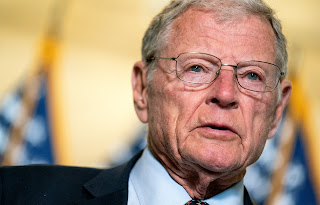
      On Friday, Senator James Mountain Inhofe announced his resignation from the United States Senate effective the end of the 117th Congress (1/3/2023).  Inhofe, 87, has served in the upper chamber since 1994.  Prior to that, he served three terms in the U.S. House.  All told, Inhofe has served 35 years in Washington.  Prior to that, he served as mayor of Tulsa for six years and prior to those ten years in the Oklahoma legislature.  In total, Inhofe has spent over 50 years in elective office.

     During his time in the Senate, Inhofe served as Chairman of the Committee on Environment and Public Works and the powerful Armed Services Committee.  He first came to national attention in 1993, while in the House when Inhofe led the effort to reform the discharge petition rule.  House leadership  used the process to bottle up bills in committee and keep them from getting a floor vote.  Inhofe has been a vocal critic of those who believe in man-made climate change and global warming.  He wrote a book entitled, “The Greatest Hoax: How the Global Warming Conspiracy Threatens Your Future.”

     Like Senators Boren, Nickles and Coburn, Inhofe by resigning before March 1st saved Oklahomans from a special election.  The special election to fill the remaining four years in Inhofe’s term will be held as the same time as this year’s general election.   Both of Oklahoma’s U.S. Senate seats will be up in November.  Expect the Republican field to replace Inhofe to be crowded. 

     In an interview, Inhofe endorsed his chief of staff, Luke Holland, to replace him.  He said he would campaign for Holland before the GOP primary, which is June 28th.  Holland is a fourth generation Oklahoman who grew up in Bartlesville and already has a website.  Former Oklahoma Speaker of the House T.W. Shannon and Congressmen Kevin Hern and Mark Wayne Mullin are also potential candidates.  Three thoughts about Senator Inhofe:

     First, Senator Inhofe is conservative.  He has been consistently ranked as one of the most conservative members of the Senate.  He is unapologetically pro-life and pro second amendment.  He is a strong and reliable supporter of the military.  The military will miss him and his staunch loyalty.

     Second, Senator Inhofe is trying to pass the baton.  His endorsement of Holland is meant to keep his agenda and political views alive.  It remains to be seen if that works in 2022.  It didn’t work in 2003, when Senator Don Nickles resigned.  Senator Inhofe endorsed and campaigned for then OKC Mayor Kirk Humphries.  When former Congressman Tom Coburn got in the race, it spoiled Inhofe’s plan.  Coburn easily won the Republican primary.    

     Third, Inhofe wasn’t afraid to disagree.  In 2010, when earmarks were banned in the Senate, Coburn called earmarks nothing more than re-election tokens.  Inhofe said elimination of earmarks was a phony issue.  Coburn said earmarks were the gateway drug to overspending.   The GOP Senate voted to eliminate earmarks in 2010(Remember the ‘bridge to nowhere’).

     In February 2021, the Democrat controlled U.S. House voted to bring back earmarks.  In April 2021, the Senate followed their lead.  Inhofe and several other Republican Senators voted to bring earmarks back.  Coburn’s successor, Senator Lankford said: “The problem is earmarks are one of the worse of the worst ways that Congress spends taxpayer dollars.  They are often a misuse of funds and become a way to buy votes from other legislators on bills they normally wouldn’t vote for.”  Lankford voted no, Inhofe yes on bringing them back.

     The issue of earmarks is a heavily debated topic by Republicans.  Former President Trump favors earmarks.  Most fiscal conservative Republicans oppose earmarks for the reasons listed above.

     Senator Inhofe will be missed.  He was a stable, consistent, reliable voice for Oklahoma in Washington for 35 years.  British statesman Benjamin Disraeli said, “the secret of success is constancy of purpose.”  Jim Inhofe knew and remained focused on his purpose.  Oklahomans were blessed to have Senator Inhofe represent them.


Sunday, February 20, 2022

PUTIN FACES CHALLENGES WITH UKRAINE- IT WON'T BE EASY!

 Weekly Opinion Editorial


UKRAINE EXPLAINED

by Steve Fair


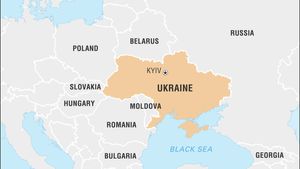
     Ukraine is a country in eastern Europe.  It is slightly smaller than Texas in land mass and has a population of 41 million people.  It borders Russia to the east and Poland and Hungary to the west.  Ukraine was a part of the USSR, but gained its independence in 1991, following the dissolution of the Soviet Union.  Ukraine is the poorest country in Europe and suffers from a high poverty rate with wide spread corruption. 

     Ukraine maintained a friendly relationship with Russia until 2014, when Russia, under Vladimir Putin, ‘annexed’ Crimea, a peninsula along the northern coast of the Black Sea and a part of Ukraine.  Crimea has a population of 2.4 million, made up of mostly ethnic Russians and Ukrainians.

    After the Crimea invasion, Ukrainians hearts hardened against Russia and Putin.  They became friendlier to NATO and the western world.  Why does Putin want Ukraine? Three reasons:

     First, it’s about geography.  Moscow needs warm water open sea lanes.  Russia’s inability to have direct access to the oceans have long been a weakness.  Ukraine, with eighteen sea ports, has the most powerful sea port potential among all countries of the Black Sea.  In the event of a war, the Russian navy currently can’t get to the Baltic Sea because NATO controls the Skagerrak Strait.  In many ways, Russia is land locked and Putin needs Ukraine for military and commercial shipping reasons.

     Second, it’s about natural resources.  Ukraine has high concentrations of coal, iron, oil, natural gas, manganese, graphite, titanium, nickel, and timber.       For centuries, Ukraine has been known as the ‘breadbasket of Europe.’  It is home to twenty five percent of the world’s super-fertile or black soil.  An area larger than Italy is currently cultivated.  Ukraine is among the top three grain exporters in the world. Ukraine is one of the top three exporters of organic products to the EU.  In the past 30 years they have struggled getting their products to other countries, but that is changing.  Putin needs Ukraine to feed Russia and to provide oil/gas and other resources to Russia. 

     Third, Putin believes Ukraine is a part of Russian.  “As the wall that has emerged in recent years between Russia and Ukraine, between the parts of what is essentially the same historical and spiritual space, to my mind is our great common misfortune and tragedy. These are, first and foremost, the consequences of our own mistakes made at different periods of time. But these are also the result of deliberate efforts by those forces that have always sought to undermine our unity,” Putin wrote last year.  He has called Ukraine the ‘crown jewel of Russia.’  Putin believes it is his duty to reunite the old USSR.  He wants that as his legacy and he certainly doesn’t want a member of NATO on his border (Ukraine is not a member of NATO yet). 

     If Putin invades Ukraine, it will not be a cake walk.  Ukraine has the largest military force in Europe- over 200,000 soldiers—and they have vowed to fight.  “Do not doubt, the Armed Forces are absolutely ready to fight back and will not give up the Ukrainian lands!” Ukrainian Defense Minister Oleksii Reznikov said.   Putin faces opposition at home on the planned seizing of Ukraine.  Back in 2014, he faced opposition when he annexed Crimea. 

     Unfortunately, public opinion doesn’t mean much in a totalitarian, authoritarian, repressive form of government where elections are rigged, leaders don’t follow founding documents and do what they want.  Americans are learning to relate.


Sunday, February 13, 2022

INSTILLING HOPE IN STATE WORKERS NOT A FUNCTION OF GOVERNMENT- THAT IS THE HOLY SPIRIT'S JOB!

 Weekly Opinion Editorial


A FORK IN THE ROAD!

by Steve Fair

     On Monday February 7th, Governor Kevin Stitt delivered his fourth ‘state of the state’ address to a joint session of the Oklahoma legislature.  The governor said Oklahoma is economically in better shape than the rest of the country.  Stitt claims 27,000 people have moved to Oklahoma in the past two years, and that 40,000 more Oklahomans have jobs than when he was inaugurated as governor (2017).  He said Oklahoma’s unemployment is down to 2.3%, lowest in state history. 

     The governor said the Sooner state is at a crossroads, a fork in the road, on public policy.  According to Stitt, one path leads toward Oklahoma becoming a Top Ten state, the other fork, the path of a jigsaw puzzle of jurisdiction. 

     Stitt outlined four checkpoints on the road to Oklahoma becoming a top ten state.  Those checkpoints are: (1) Driving hope for all Oklahomans, (2) Protecting Oklahomans and their way of life, (3) Making Oklahoma more business friendly, and (4) Delivering taxpayers more for their money. 

     Stitt said he supports school vouchers, an investment of $13 billion dollars in state infrastructure in the next decade, a revamp of the state’s initiative petition process, and consolidation of the state’s law enforcement agencies into one unified command structure.  During his address, Stitt quoted motivational author Jim Collins and Oklahoma native son Will Rogers, and concluded his remarks by thanking God for being an Oklahoman.  Three observations:

     First, Oklahoma has a long way to go to become a top ten state.  The Sooner state ranks in the bottom third of states in per capita income.  It ranks high in prison population, low in mental health services, high in obesity, and low in educational outcomes.  It will take decades before the state becomes top ten unless radical major changes to policy are implemented.  Oklahoma government hasn’t shown the political willpower to make those radical changes. 

     Stitt’s idea of parents controlling their tax dollars and being able to enroll their child in a school that might give the child better outcomes is a start, but it appears that is dead on arrival.  Oklahoma Speaker of the House Charles McCall, (R-Atoka) said on Thursday he has no intention of hearing SB #1647, authored by Senate President Pro Tempe Greg Treat, (R-OKC).  McCall calls SB #1647 a public-school killer for rural Oklahoma.  Treat has vowed to double down on the proposal.  We will see who wins this battle.

     Second, hope is a good thing, but it will not make Oklahoma a top ten state.  Hope is the anchor of the soul for a Christian.  It looks back to what Christ did on the cross and forward to when He will return.  Secular hope is positive thinking, good wishes, and a crossing of the fingers.  It has no place in public policy.   Government should be non-emotional, impassive and logical, not seeking to motivate citizens with feel good philosophy.  Instead of training every state employee in the next two years on how to apply the ‘science of hope’ in their agencies, train them on how to fundamentally do their job more efficiently and save taxpayers money.  Having happy, well-adjusted, hopeful bureaucrats isn’t the job of the government.

     Third, Oklahomans were sold a bill of goods on the medical marijuana state question.  Oklahomans approved it based on a lack of information and misinformation.  Stitt proposes changing the initiative petition process, but gave no details as to how he wants it changed.  Policy makers should remember that changes made to the process affects everyone’s liberty, not just the liberal out of state concerns Stitt mentioned in his address.  Improvement in ballot language, and full disclosure in what State Question implementation will cost taxpayers would be a major improvement.  More and better information before the vote might prevent passage of proposals that result in ‘unintended consequences.’

     Governor Stitt said Oklahoma has come to a fork in the road on public policy.  Yogi Berra famously said, “When you come to a fork in the road….take it.”  Oklahoma government usually does just that.