Monday, January 5, 2015

WALK THE WALK!

Weekly Opinion Editorial
Walk the Walk!
by Steve Fair

     The Oklahoma state Board of Equalization is composed of six Oklahoma statewide elected officials and one appointee.  The Governor chairs the Board and the rest of the board include the Lt. Governor, the State Auditor, State Treasurer, Attorney General, Superintendent of Public Instruction, and the Secretary of Agriculture (the appointee).  The Board is responsible for certifying the amount of money the state legislature will have available for appropriation in the coming fiscal year.   The projected revenue for FY 2016 is expected to be $60.7 million more than FY 2014.  Because of the increase in revenue a provision of SB #1246 was triggered which reduced the top rate of the state income tax from 5.25% to 5%. 
     All seven Equalization Board members agreed the revenue requirements of SB #1246 had been satisfied, but not all board members believe the automatic trigger mechanism regarding the income tax put in place by the Oklahoma Legislature in 2011 was a good idea. State Treasurer Ken Miller said, “My vote was in no way an endorsement of the policy.  As I cautioned before the bill’s passage, tax triggers are illogical from an economic perspective. I can think of no financial reason to pass a measure predicated on future revenue growth when policymakers could simply have waited to preserve flexibility for challenges — like the $300 million budget hole announced today.” 
    The board approved an estimate of $6,914,776,463 in available revenue for the FY 2016.  That is $298.1 million, or 4.1 percent, less than the legislatively-approved FY 15 appropriated state budget of $7,212,855,361.  State Auditor Gary Jones, while voting for the motion to approve said, “I think in the future we ought to be dealing with actual numbers rather than estimated numbers from the past. It wasn’t necessary to make this decision now if the Legislature had given us the maximum amount of time to make that decision.”     
     The Oklahoma State Constitution requires the board to meet again in late February to make a second estimate that will be used in negotiations between the governor and legislators to determine FY 16 appropriations levels for state agencies.  Unless the price of a barrel of oil increases, it appears FY 2015 will be a down budget year for Oklahoma government. 
     According to Preston Doerflinger, Secretary of Finance, Administration and Information Technology, the February certification is more relevant than the December estimate.  “If oil prices continue sliding and the energy sector shrinks, there may be less revenue in February than there is today – we’ll see. In any event, the challenge is not insurmountable and we can and will manage it,” Doerflinger said.  The governor says the current budget process in Oklahoma takes too much revenue out of the picture and significantly reduces the amount of money the legislature has to appropriate each year.  “It leaves very little wiggle room for us to be able to prioritize where our money’s going to go, especially as needs in the state change. That’s not a good way to budget. It doesn’t give us the flexibility that we need. That’s why we saw a little bit of a revenue shortfall last year, because all of the money was already allocated to other spending priorities,” Governor Fallin said.
     State Auditor and Inspector Gary Jones said he is going to encourage the State Senate to require state agencies to prepare a ‘needs based’ budget.  “Needs based budgeting is a modified version of zero-based budgeting.  It requires budget requests be based on what you need and requires the agency look at all revenue sources before you ask for an appropriation, including what you have in a reserve fund.  In many cases, they’re getting more revenue than they’re spending and they continue to build this (reserves) up,” Jones said. 
      Jones believes the current budget process is shortsighted and doesn’t take into account the volatile nature of the revenue stream. “We don’t have any long-range plans on budget projections,” he said. “We’re always looking at just the next year. We’ve got to start looking longer than that, because you look at the peaks and valleys.”
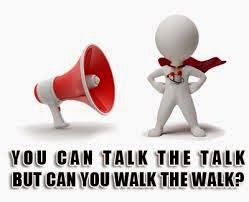
     If the 2015 Oklahoma state legislature has four percent less revenue to appropriate this year to state agencies, that presents a real opportunity for self-described fiscal conservative lawmakers.  Oklahoma government is ripe to be right-sized, just like in the campaign literature.  Instead of simply enacting one size fits all/across the board cuts as they have done in the past, legislative leaders should take Jones’ advice and require state agencies to justify every penny they request in their FY 2015 budget.  Stockpiles of reserve funds sitting in agency accounts should be publicly disclosed and considered before another nickel of tax dollars are given to an agency.  GOP leaders- time to walk the walk, not just talk the talk.

Monday, December 29, 2014

BE IT RESOLVED!


Be it Resolved!
by Steve Fair

     New Years often begins with the making of resolutions.  New Years resolutions are not a modern invention.  They have been around since ancient times.  The Romans began each year by making promises to the god Janus, for whom the month of January is named.  The most popular resolutions people make include eating healthier, exercising, and resolving to lose weight or to quit smoking, working toward a better education, volunteering more, spending more time with family, and getting out of debt.  How successful are most of us at fulfilling New Year’s resolutions?
     According to a 2007 study by Richard Wiseman from the University of Bristol involving 3,000 people, 88% of those who set New Year resolutions fail.  That is in spite of the fact that 52% of the study's participants were confident of success at the beginning.
According to the University of Scranton, Journal of Clinical Psychology, “45% of Americans usually make resolutions and 37% never make resolutions.  Those in their twenties are three times more likely to be successful at achieving their resolution goal than those in their fifties.”
     While most people resolve to do more in the New Year, Princeton psychologist Edlar Shafir and Harvard economist Senhil Mullainathan suggest the best strategy is to resolve to do less, not more.  They argue when busy people get busier; it leads to ignored deadlines, disorganization and a vicious cycle of falling further and further behind.  They do not discount the importance of a person staying busy and productive, but they caution against what they describe as “tunneling”: a laser-like focus on the tasks immediately at hand, which often results in a disregard for the bigger picture. They believe focusing on a deadline at the expense of long-term happiness is counter-productive.
     In 2013, Atlantic magazine published several New Year’s resolution lists of celebrities.  They included a list of 17 resolutions by Jonathan Swift, the author of Gulliver’s Travels, and a list of 33 by Oklahoman Woody Guthrie.  Guthrie’s list included several goals revealing his socialist political leanings, but also included one about washing his teeth (if he had any) and waking up to fight.  They also included a handwritten list of Marilyn Monroe’s resolutions.
     In 1722, a nineteen year old boy named Jonathan Edwards, who was studying for ministry, wrote out his New Year’s resolutions.  Edwards was the interim pastor at a small Presbyterian church in New York City.  He wrote as the introduction to the resolutions: “Being sensible that I am unable to do anything without God’s help, I do humbly entreat him by his grace to enable me to keep these Resolutions, so far as they are agreeable to his will, for Christ’s sake. Remember to read over these Resolutions once a week.” Edward’s list had seventy resolutions that he used to guide him throughout his life. He read them weekly and resolved to keep those resolutions.  Edwards ultimately became President of Princeton University and is famous for preaching, “Sinners in the Hands of an Angry God.”  The wisdom and insight of Edward's resolutions are still profitable today.  To see a complete list of Edward’s resolutions, go to: http://www.desiringgod.org/articles/the-resolutions-of-jonathan-edwards.
     New Year’s resolutions most often involve self-improvement.  They are rarely a resolution to improve one’s spiritual condition or relationship with their fellow man.  Edward’s resolutions were basically ones that focused on his desire to please his Creator, not in becoming more satisfied with himself. 
     As we enter into 2015, may each American, no matter their political Party affiliation, resolve to understand that we, individually or collectively, can do nothing without God’s help.  No amount of well intentioned resolutions, effective debating, positioning, coalition building or proclaiming of the truth will be effective without His grace.  If we understand that one simple principle in 2015, perhaps we will see God have mercy on America.

Monday, December 22, 2014

ALL OF THE ABOVE!

Weekly Opinion Editorial
ALL OF THE ABOVE?
by Steve Fair

     The Oklahoma Republican Party will be hosting the Southern Republican Leadership Conference May 21-23, 2015 in Oklahoma City.  Speakers that have confirmed are potential 2016 presidential candidates Rick Santorum, Ben Carson, Bobby Jindal, and Carly Fiorina.  There will no doubt be many others.  2016 could be the largest field of presidential candidates since 1940 when nine Republicans ran for the Republican nomination.  Other keynote speakers include T. Boone Pickens and several other members of the energy sector.  These businesspeople will be addressing America’s need for a comprehensive energy policy. 
     The events will be held at the Cox Convention Center in downtown Oklahoma City.  Explaining the significance of the 2015 event, OKGOP Chairman Dave Weston said, "We're honored to have been chosen by the RNC as the host city for the 2015 SRLC. And this year's event, unlike any other in quite a few years, will be an opportunity to witness the Republican Party’s presidential hopefuls descend upon Oklahoma City precisely at the time they begin to make announcements for their candidacy and begin kicking off in their campaigns."  The theme of the conference is, “Energizing America.” 
     Why does America need a common sense Energy Policy?  Because President Obama and his administration has declared war on fossil fuels.  Coal was the first target.  On page 19 of his Climate Action Plan, Obama writes, “Going forward, we will promote fuel-switching from coal to gas for electricity production.”  To expedite that transition, the Obama administration tightened restrictions on carbon emissions, which directly impact coal fired plants.  Switching to natural gas may be a great strategy for the future, but the reality is almost 40% of America’s electricity today is generated by coal fired plants.  When you hamstring an industry with regulations so they produce less of their product, the price goes up.  Electricity costs are at an all time high and until the restrictions are loosened, they will continue to increase.
     The president has been quick to take credit for the boom in the oil and gas sector, even though he has opposed drilling on public lands and the completion of the Keystone pipeline.       Harold Hamm of Continental Resources believes that simply opening up drilling on public lands could be the solution needed to pay off the huge national debt.  "I truly believe the federal government could over time raise $18 trillion in royalties." That's more than the U.S. national debt, Hamm says.  Hamm was interviewed by the Wall Street Journal in 2011.  That interview can be accessed at http://www.wsj.com/articles/SB10001424052970204226204576602524023932438.
     President Obama calls his energy policy the All-of-the-Above Energy Strategy.  On the White House website, it states the strategy…” is making America more energy independent and supporting jobs. Since the President took office, domestic energy-related emissions have fallen to their lowest level in 20 years, and our dependence on foreign oil is at a 20-year low — and declining. America is producing more oil, gas, and renewable energy, and the U.S. is becoming more energy efficient overall. These trends are increasing our energy security, cutting our carbon pollution, and enhancing our economic growth.” Several times in recent months, the president has taken credit for the boom in the oil sector. 
     Obama taking credit for the oil/gas boom is like a dog running out in front of a caravan of cars prancing along like he is leading the procession.  It’s just a coincidence the dog is in front and it’s the same with the President.  Obama is no friend of oil/gas/coal.  He has done little or nothing to help the fossil fuel energy sector in America.  He has bent over backwards to help the ‘renewable’ energy sector, aka wind and bio-fuel.  Oil/gas has grown in spite of the president and not because of him. Fact is,the vast majority of Americans still have vehicles that run on gasoline and the demand for fossil fuel worldwide is at it’s highest. 
     American taxpayers subsidize the ‘green fuels’ by paying more for the food we consume.  Much of the corn that in the past was used in food processing is now going into our gas tanks.  We pay more at the grocery shelf for the privilege of buying ethanol.  Ten(10) percent (and soon to be 15%) of the gasoline going into your tank is corn liquor/moonshine and you are paying for the privilege to burn it.  The next President of the United States needs to understand fossil fuels may be the answer to not only our energy issues, but our debt issues.  We need a common sense approach to energy in America.  The goal of the SRLC next May will be to help educate the eventual GOP nominee on the importance of ALL energy to America. 

Monday, December 15, 2014

CAN AMERICA CHEAT HISTORY!

Weekly Opinion Editorial

            CAN AMERICA CHEAT HISTORY?
            by Steve Fair
     Last Wednesday, Dr. Tom Coburn gave his farewell speech to the U.S. Senate.  He was emotional and reflective on his time in the Senate, but used the time to ask a very important rhetorical question: Can America cheat history?  Can America’s Democratic Republic form of government survive longer than other countries that had similar forms of government?
History tells us the average life span of a Democratic Republic is about 200 years.  If that is the case, then America is living on borrowed time at 238 years. 

     Alexander Fraser Tytler, a Scottish judge and historian, said, A democracy is always temporary in nature; it simply cannot exist as a permanent form of government. A democracy will continue to exist up until the time that voters discover that they can vote themselves generous gifts from the public treasury. From that moment on, the majority always votes for the candidates who promise the most benefits from the public treasury, with the result that every democracy will finally collapse due to loose fiscal policy, which is always followed by a dictatorship.  The average age of the world's greatest civilizations from the beginning of history has been about 200 years. During those 200 years, these nations always progressed through the following sequence: From bondage to spiritual faith; from spiritual faith to great courage; from courage to liberty; from liberty to abundance; from abundance to selfishness; from selfishness to complacency; from complacency to apathy; from apathy to dependence; from dependence back into bondage.”  Tytler was right- no Republic has survived much more than 200 years.  Coburn addressed several areas America- and her government- must improve if we are to survive.
      First, if America is to survive, out of control spending must be addressed.  America is $18 trillion dollars in debt.  Congress just passed a $1.1 trillion dollar spending bill and sent it to the President.  Coburn identified billions of dollars of duplication and waste in the budget and yet lawmakers on both sides of the aisle signed off on it.  In fact many Republicans fought for their chance to get to the pig trough to get something for their state.  Coburn admonished that practice in his speech. “Your state is not mentioned one time in that oath,” he said. “Your whole goal is to protect the Constitution and its liberties. It’s not to provide benefits for your state.” In other words, pork is pork, no matter where it is. 

     Second, elected officials must get back to following the founding documents.  Quite frankly, that is the only thing they have the legal authority to do- uphold the Constitution-, but in modern times, the Constitution has been largely ignored.  During his speech, Coburn read the ‘oath of office’ all Senators take and then stated that many had abandoned their oath and responsibility for the mission of, ‘bringing home the bacon.’ 

We established the Constitution to try to protect those rights and to delineate those rights. We put in the limitation of the government and outlined the rights of each individual citizen upon which the government shall not infringe. Yet what comes out of this body and this Congress every day, to my chagrin, infringes those guaranteed rights,” Coburn said.

     Third, elected officials must exercise oversight of government if America is to survive.  “To know how to reach a destination, you must first know where you are, and without oversight --effective, vigorous oversight --you will never solve anything,” Coburn said.  It is the responsibility of Congress to make sure government does a good job in spending our money.  It is the responsibility of Congress to make sure government doesn’t overreach and impede our liberty.  Congress needs to hold bureaucrats accountable.  “Effective oversight is an effective tool to expose government overreach and wasteful spending, but it also markedly exposes where we lose our liberty and our essential freedoms,” Coburn said. 
     Coburn concluded with a message of hope.  “I tell people everywhere I go… we do not have one problem we cannot solve,” he said. “There is nothing too big for us. They’re all solvable.  Can we cheat history? Can we do something better than has been done in the past? I honestly believe we can. But I don’t believe we can if we continue to ignore the wisdom of our founding documents,” said Coburn.
      Can America cheat history?  I’m not sure, but I predict we will be referencing Coburn’s ‘farewell speech,’ of 2014 for decades to come.

To read a transcript of Coburn's speech, go to:
 http://www.coburn.senate.gov/public//index.cfm?a=Files.Serve&File_id=9a879027-0b11-4fde-a821-9aaa9b809426

To watch Coburn's speech on Youtube, go to: 
https://www.youtube.com/watch?v=vRfg5IyZVN0&list=UUVfmzzKSutzOyJIikyseNHg

Monday, November 17, 2014

It started in Stephens County on November 7, 2006!

Weekly Opinion Editorial

IT STARTED IN STEPHENS COUNTY!
by Steve Fair
     On Tuesday, newly elected Oklahoma state legislators were sworn into office.  The 2015 state legislature will be made up of 40 Republicans and 8 Democrats in the Senate and 72 Republicans and 29 Democrats in the House.  That is amazing, especially if you consider that just 8 years ago the State Senate had 24 of each Party, and the House was 57, Rs and 44 Ds.    On Monday night, Senator Anthony Sykes, (R-Moore) called to thank me for helping him get elected the first time.  “You are the reason I was sworn in the first time,” Sykes said.  That was a kind thing to say, but the truth is the reason was more involved than that. 
     Election night 2006, Republicans weren’t faring very well across Oklahoma or the country.  Oklahoma’s incumbent Governor Brad Henry cruised to victory with over 60% of the vote, Jari Askins won a close race for Lt. Governor over former Speaker of the House Todd Hiett, and Lloyd Fields beat incumbent Labor Commissioner Brenda Reneau by less than 3,000 votes statewide.  When the dust had settled, Democrats had won eight of the nine statewide races in Oklahoma.  Nationally the Democrats picked up 6 seats in the Senate and 31 seats in the U.S. House.  Congressman Tom Cole called the 2006 midterms, ‘a Democrat tsunami.’
     In 2006, only three seats were picked up in the Oklahoma legislature- one in the Senate and two in the State House.  Two were in tiny Stephens County, Oklahoma where Republicans were less than 30% of the registered voters.  Anthony Sykes beat an incumbent state Senator and Dennis Johnson won an open seat for state House.  In Muskogee County, George Faught won an open seat.  Outside of Stephens County, Republicans in Oklahoma had little to celebrate.
     Oklahoma is considered the reddest of the red states, because Oklahoma is the only state in America where every county in the state has voted for the Republican nominee for President the last three elections- 2004, 2008, 2012.  Every statewide elected official is a Republican.  Republicans have overwhelming majorities in the state legislature.  Republicans are winning at the local level and dominated the 2014 election cycle, statewide, legislatively, and locally. 
     Interestingly, the growth of the Republican Party in Oklahoma hasn’t been in the large population centers in the state.  In Oklahoma County and Tulsa County, voter affiliation percentage for Republicans is about the same as it was in 2006.  The growth of the Republican Party in Oklahoma has been the smaller rural counties.  In 2006, Republicans were the dominate Party in just nineteen counties, in 2014, it is 27 counties.  Several other rural counties are rapidly trending Republican. But where did it start? 
     It all started in 2006 in Stephens County when two very qualified candidates for state legislature ran for office against incredible odds and won.  They won because they worked hard, engaged voters and had great campaign teams helping them.  They won because their volunteers were more concerned with changing their government than just changing who represented them.  It wasn’t about the personalities- it was about the cause.  These dedicated Republicans knocked doors, put out signs, made calls and encouraged their friends and neighbors to vote and on November 7th, Sykes and Johnson were elected.  Sykes election knotted up the state Senate 24-24 and for two years, Republicans and Democrats shared control of the State Senate.  That would not have happened if some dedicated people in Stephens County, Oklahoma didn’t think it was important enough to invest their time, talent and energy to get Sykes elected.
     Today, it’s trendy to be a Republican in Oklahoma.  It’s cool, but in 2006, having an R behind your name was a challenge for a candidate.  There was no prominent Republican at the top of the ticket. Congressman Ernest Istook, the Republican candidate for Governor,  got less than 35% of the vote.  He was a drag on the ticket.   So why did Sykes and Johnson win?  They won because they were more qualified than their opponent and the voters recognized that.  They won because they wanted the job more than their opponent, and they won because they had a volunteer base their opponents couldn’t match.
     It’s important to remember how and a movement started.  The Republican domination in Oklahoma didn’t start in the state’s urban areas.  It didn’t start in the nineteen counties that were already predominately Republican.  The Republican revolution in Oklahoma started in tiny Stephens County, Oklahoma when a handful of people believed they could make a difference in their little corner of the state by electing two very principled, ethical candidates and that movement spread statewide.  Those Stephens County Republicans do more than just have an annual Fish Fry that draws a thousand people or a Chili Cook-off that attracts an equal amount.  They change their government.  Take a bow Stephens County Republicans- you changed and are changing Oklahoma for the better. 

Monday, November 10, 2014

D's WANT A DO-OVER!

Weekly Opinion Editorial
D’s WANT DO-OVER!
by Steve Fair

     The 2014 elections are over and Republicans, local, statewide, and nationally, did well.  It wasn’t a clean sweep, as I had predicted, but it was close.  It is clear the election was about the Obama administrations failed policies and the American people are ready to give the GOP a chance to lead.  The key will be for the Republican leadership in the House and Senate to do what they campaigned on- repeal Obama Care, secure the border and balance the budget.  All too often campaign promises are forgotten when the election ends.  If that happens this time, after the American people giving the Rs a chance to lead, GOP lawmakers will guarantee themselves a permanent minority status.  They have to step up and take on the hard issues.
     In Oklahoma, Republicans did exceptionally well.  The R’s picked up four(4) state Senate seats and maintained their 72-29 margin in the state House.  All four statewide offices up for election went Republican.  The five Congressional races and two Senate races went overwhelmingly Republican.  Republicans won local races throughout the state, so overall it was a very good night.  But it seems the Democrats want a do-over in one race. 
     Earl Emmitt Everett, an 81 year old retired schoolteacher, was the Democrat nominee for the Second Congressional District in Oklahoma.  Everett, a Korean War vet, died on Sunday November 2nd after a car wreck in Fort Gibson on Friday October 31st.  Everett’s opponent, incumbent Congressman Mark Wayne Mullin, said, "My family and our entire team extend our deepest condolences to the family and friends of Earl Everett. We pray for God's grace and comfort for them during this time and in the coming weeks.”  Everett had won the Democrat nomination in the district on his second try.  He had little or no contact with the State Democrat Party.  In an interview with the A.P., Everett had said, . “I don’t have anything against the party, but they’re a little bit out of pocket for me.”
     After the November 4th election was over, one that Mullins won with over 70% of the vote, the State Democrat Party announced they were asking Attorney General Scott Pruitt for an opinion on whether they had a right to ask for a special election to be called.  According to media accounts, the Democrat’s Executive Committee meet on Saturday November 8th to consider three people as their nominee if the A.G. agrees they are entitled to a do-over election.
     Current Oklahoma state law says that in the event of a candidate’s death before an election, the governor is to set a special election.  Evidently, the leaders of the deceased’s political Party are allowed to name a replacement nominee and ask for a special election. But it remains unclear if that ‘special’ election has to be called before a scheduled election is held (which was done in this case).  The cost estimates to hold a special election for the 2nd district are $350-375,000 of tax dollars. 
      Why would state law allow the will of 150,000 voters in the Second District on November 4th be cast aside?  That doesn’t make any sense.  Voters in the Second District overwhelmingly voted to re-elect Congressman Mullin.  While it’s highly unlikely he would be defeated in a special election, why would the 100k plus people who voted for Mullins last Tuesday be disenfranchised?  If the law is this vague, then it needs to be changed.  If the Ds are just using a loophole to get a do-over election, they should be ashamed.  Another election would cost taxpayers a lot of money that could be used in areas like education, pension funding, etc. 
     Why would Democrats want a do-over?  They were humiliated at the polls statewide and in the Second Congressional District on November 4th.  It is highly unlikely whoever they nominate will beat Mullin, or even come close.  Demanding the taxpayers pay for a $350K election just because it can be done is foolhardy, irresponsible and graphically illustrates how out of touch the Democrats are with the people.
     The Democrat Party leadership should take the high road and withdraw their request for an Attorney .General’s opinion and let the results of the November 4th election stand.

Monday, November 3, 2014

YELLING ON THE SIDELINES!

Weekly Opinion Editorial
YELLING ON THE SIDELINES!
By Steve Fair
     The Oklahoma State Election Board has released the latest figures on voter affiliation in the state.  As of November 1st, there are just 2,897 more registered Democrats in Oklahoma than Republicans.  Since January 1st, Democrats have lost 1,459 voters statewide while Republicans have gained 26,924.  The number of voters registering Independent increased 18,175 since the first of the year.  Currently 12.7% of the voters in Oklahoma are registered Independent, up from 12.1% January 1st. 
     In Stephens County, Republicans continue to gain on the Democrats.  Since January 1st, Republicans gained 428 voters, Democrats lost 275 and Independents picked up 223 voters.  Of the 25,069 registered voters in the county, 12,053 are registered Democrats, 10,403 are Republican and 2,613 are Independent.  The gap between the Ds and the Rs in the county is now just 1,650.  Less than twenty years ago, that was 14,000. 
     Republicans have come a long way in Oklahoma.  In 1996, voters registering Republican were just 34.2% statewide.  That number is now 43.5%.  In Stephens County, in 1996, just 21% of the voters were Republican.  That number is now 41.5%.  If trends continue, Oklahomans will align with the way they vote well before the 2016 election cycle.   How did Oklahoma transition from being a strong Democrat state to Republican?
     First, the Democrat Party abandoned their values.  For years, the Democrat Party was one that advocated for traditional moral values and stood up for the ‘little man,’ but after Roe vs. Wade, they became liberal on social issues and alienated many of their conservative voters.  In recent years, the liberal fringe of the Democrat Party has taken over the national Party.  The national Democrat platform opposes the second amendment (the right to keep and bear arms), embraces abortion and same sex marriage.  Those are important issues to conservative Oklahomans and when the Ds took that stance, it drove a bunch of them to the Republican Party.  In recent years, the Oklahoma Democrat Party claims they are much more conservative on issues such as gun control and abortion than the national Party, but when you go to the State Democrat Party website and click on issues, it refers you to the liberal national Democrat Party platform.
     Second, Republicans took a stand on traditional social issues.  They opposed abortion on demand and supported traditional marriage.  They re-affirmed their support of the second amendment.  All of these positive moves attracted the conservative Democrat and they begin to change Party affiliation in droves. 
     The amazing statistic in Oklahoma is the number of Independents.  Over 257,000 people are registered Independent in Oklahoma- 12.7% of the total number of registered voters.  That number continues to grow.  Voters registering Independent has increased by 18K since the first of the year.  Why register to vote as an Independent in Oklahoma?  The state has ‘closed’ primaries, which means only those who are registered in a Party can participate in that Parties’ primary elections and that is the way it should be.  Republicans should select the Republican nominee.  Democrats should select the Democrat nominee.  Open primaries are like having the Presbyterians vote on who will pastor the Baptist church.  It’s like letting the Rotarians decide what community project the Lions are going to do this year.  The concept is asinine and doesn’t make any sense. 
     Some states have ‘open’ primaries and let voters decide which primary they want to vote in when they show up at the polling location.  The ‘open’ primary system is one that encourages people to ‘play’ with their vote.  A voter from another Party can vote for the weakest candidate in the opposing Party to insure a victory for their candidate in the general election.  That happened in Michigan in 2012, when Democrats swarmed the polls to vote for Rick Santorum over Mitt Romney to hurt his changes to gain the GOP nomination.  Bottom line, registering Independent in a state with an ‘open’ primary makes some sense, but not in Oklahoma. 
     Many of those registered Independent in Oklahoma are simply feed up with both Parties and want to send a message of discontent to both Parties, but the fact is they are cut out of the process.  Conservative Independents should consider changing their Party affiliation to Republican where they can vote in the primary.  Standing on the sidelines yelling at those playing is not participating in the process.